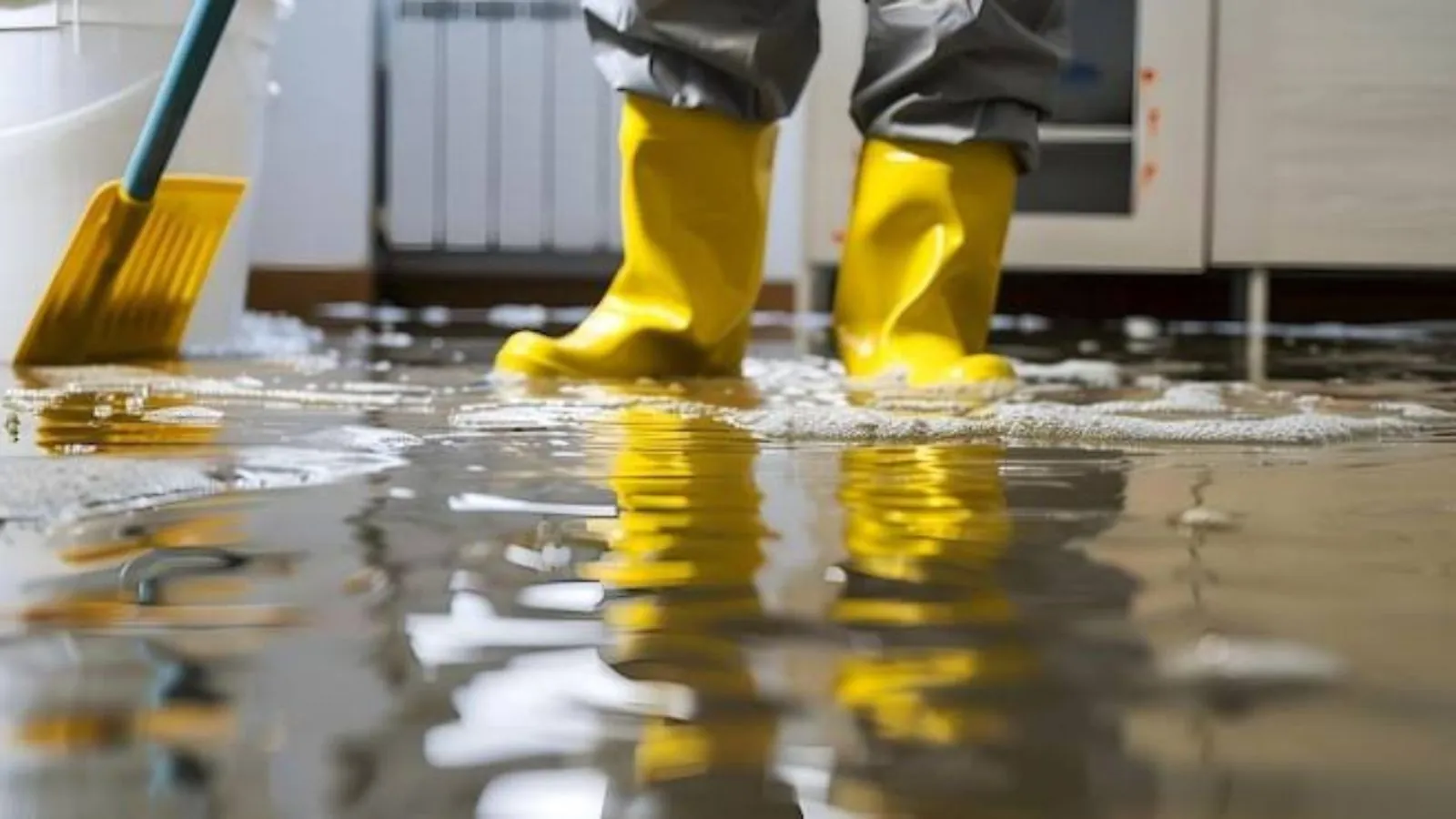
Flood damage cleanup in Oswego starts with a different assumption than a burst pipe: the water is not clean. Floodwater from groundwater, a creek or storm runoff carries soil, bacteria and chemicals, which makes it Category 3 under the IICRC S500 standard. Porous materials that it touched usually have to be removed, and everything left behind is cleaned and disinfected before drying starts.
Flood emergency: when floodwater reaches the house
Our emergency line is open 24/7 for flooding, because storms do not wait for business hours. If water is still rising, do not go into the basement to rescue things. The risks are electrical shock, contaminated water and a hidden drop in the floor or stairs.
Flood safety rules
- Stay out of water that may touch electrical outlets or a panel. If you cannot reach the panel dry, call the utility.
- Do not walk through flood water without waders and gloves, and keep children and pets away.
- If you smell gas, leave and call Nicor at 888-642-6748, then 911.
- Do not use food, medicine or cosmetics that touched floodwater.
What happens during a flood cleanup
- Document the high-water line and damaged contents with photographs.
- Extract the water with pumps and extractors.
- Remove porous materials such as wet carpet, pad, insulation and low drywall.
- Clean and disinfect hard surfaces, studs and subfloor.
- Dry the structure with air movers and dehumidifiers, then confirm readings.
Flood losses are decided by what stays and what goes. Hard surfaces like concrete and sealed tile can usually be cleaned and saved. Carpet, pad and insulation that sat in contaminated water usually cannot. Drywall wicks water upward, so we cut above the visible line. A moisture meter tells us how far to go, and we show you the readings so the tear-out has a reason.
Insurance and flood coverage
The Illinois Department of Insurance notes that standard homeowners policies typically exclude flood. Flood coverage is a separate policy, usually with a 30-day waiting period before it takes effect, and the department answers consumer questions free of charge. Call your agent early, because insurers have time limits for reporting. Our records of the water line, the readings and the removed materials give your adjuster a clear file.
What can be saved after a flood, and what cannot
Salvage decisions follow the material, not the owner's hopes. Items that are hard and non-porous, such as glass, glazed ceramic and many plastics, can be washed and disinfected. Solid wood furniture can sometimes be dried and refinished. Upholstered furniture, mattresses, stuffed items and particleboard cabinets that sat in contaminated water are rarely worth the risk of keeping.
- Paper and photographs: freeze them in bags and ask a conservator or a document drying service about next steps rather than trying to separate them wet.
- Electronics and appliances that were submerged: do not plug them in. Have a technician check them first.
- Food, medicine and cosmetics that touched floodwater: discard.
- Clothing and linens: wash hot with detergent, or discard if the smell does not come out.
We separate contents into saved, cleaned and discarded piles and list what goes out. That list is useful if your policy includes contents coverage, and it saves you from deciding things at midnight with water at your ankles.
Why timing is tighter after a flood
Floodwater carries organic material, which feeds microbes quickly in a warm basement. Once the water is out, the structure is cleaned, then dried with air movers and low-grain refrigerant dehumidifiers. Every day of delay lets moisture move farther up the drywall and into the framing, and increases the chance that mold remediation becomes part of the job. A call within the first day gives you the most options.
Flood history is local, and we keep it in proportion. Our pages for Downtown Oswego and Heritage of Oswego describe what the Village and the press have recorded about the Fox River and Waubonsee Creek, and where records stop.
Oswego flood history
The Village of Oswego publishes FEMA flood insurance rate maps, with the current maps issued in 2014, and a Waubonsee Creek gauge alongside the Fox River gauge at Montgomery. The village notes that Oswego river levels differ slightly from the Montgomery gauge, so use the maps and gauges as a guide and not as a guarantee for your lot.
In July 1996 more than 16 inches of rain fell in 24 hours in northern Kendall and southern Kane counties, a state record. Oswego and Little Rock townships were among the hardest hit. In April 2013 Kendall County was declared a disaster area after a month with 6.90 inches of rain. Both events show that creek and river flooding is a real risk here, so check whether your home sits near the Fox River or Waubonsee Creek.
Floods often come with sewage mixed in, so see sewage backup cleanup if the water came from a drain. Basement-only flooding is covered on basement water damage. After the flood, structural drying and, if growth has started, mold remediation are the next steps.
Questions about flood damage cleanup
Yes. The line is open 24/7, including storms and holidays. If water is still rising, stay out of the area and call.
Floodwater from the ground, a creek or a river is generally treated as Category 3 because of what it carries. We confirm on site.
Usually not. Carpet and pad that sat in contaminated water are typically removed. Hard surfaces can often be cleaned and saved.
Standard policies typically exclude flood, according to the Illinois Department of Insurance. Flood insurance is separate. Ask your agent.
The Village of Oswego publishes FEMA flood maps. Check them and ask your insurance agent, since coverage and risk depend on your address.