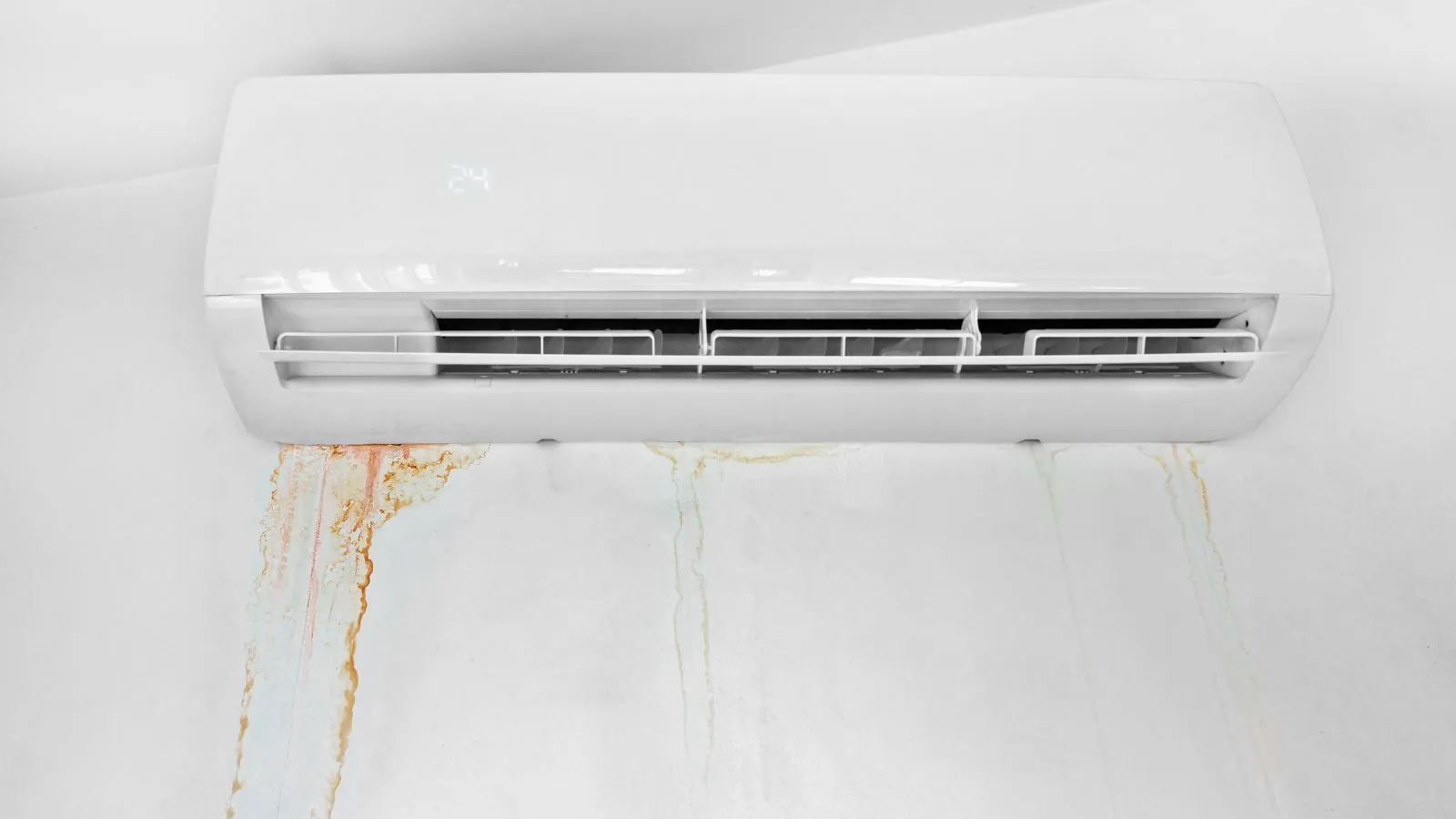
AC leak water damage in Oswego usually comes from the condensate system, the pan and drain line that carry away the water an air conditioner pulls from the air. When a drain clogs or a pan cracks, that water goes into the ceiling, the closet floor or the attic. A leak like this is often slow, and it can run for weeks before a stain appears. If water is dripping heavily, treat it as urgent and call our 24/7 line.
How an AC leak happens
Clogged drain line
Algae and debris block the condensate line and the pan overflows.
Cracked drain pan
Old pans rust or crack and leak.
Frozen evaporator coil
Low airflow or low refrigerant lets the coil ice up, then the melt overwhelms the pan.
Disconnected line
A joint pops loose and drains onto insulation or drywall.
What to do when it leaks
- Turn the AC off at the thermostat and the breaker.
- Place a bucket under the drip and photograph the source.
- If water is coming through a ceiling, stay out from under it.
- Call an HVAC technician for the system and us for the water.
Attic air handlers are the common culprit because water drips through insulation and the ceiling for a long time before anyone notices. Closet units leak onto flooring and into the subfloor. Basement units may leak behind a wall. Our moisture meter and thermal camera find the path, and we dry the affected area. For the ceiling itself, see ceiling water damage repair.
Dry the structure, not only the stain
A condensate leak is usually clean water, so the plan is straightforward: remove wet insulation, open the ceiling if needed, run air movers and a dehumidifier, and track readings. The risk is time. A leak that has gone on for weeks may already have supported growth in the cavity, and then mold remediation is part of the job. Painting over a stain does not dry what is behind it.
Preventing a repeat
A float switch in the drain pan shuts the system off when water rises. A yearly service visit clears the drain line. A leak sensor under the unit sends an alert. These three steps cost less than one ceiling repair.
Attics, closets and basements: where the water hides
An air handler in the attic is the classic hidden leak. The pan sits on top of a ceiling, so a drip can soak insulation for weeks while the drywall below slowly stains. Closet and basement air handlers are easier to spot because water reaches the floor, but they hide leaks behind walls and under flooring.
In every case the first sign is often a small stain, a rattling drain sound or a musty smell near the vent, not a flood.
When we dry an AC leak, we read the ceiling drywall, the insulation and the framing above it, and we check the duct boots, because a cold duct that sweats in humid air can wet the ceiling with no clog at all. That is why a system repair alone does not always end the stain.
Drying a condensate leak follows the IICRC S500 standard for water damage restoration. Readings are taken against a dry reference from unaffected material, and the equipment stays until the wet ceiling and framing match it, which is why a stain that has stopped growing is not the same as a dry ceiling.
Cooling season and house age
The Chicago Metropolitan Agency for Planning data shows that most Oswego homes were built between 1990 and 2009, so many central air systems are 15 to 30 years old. Aging pans and drain lines are a common failure point at that age, and systems in attics are the usual hidden leak.
Oswego has hot, humid summers, and a system that runs hard makes a lot of condensate. A clogged line is more likely to overflow in July than in April.
Insurance may cover resulting water damage from a sudden leak but not wear or slow seepage. Keep the HVAC service records. For leaks elsewhere in the house, see appliance leak water damage.
Questions about ac leak water damage
The most common cause is a clogged condensate drain line. A cracked pan or a frozen coil are other causes.
If water is flowing heavily or coming through a ceiling, yes. Turn the system off and call. Our line is open 24/7.
Wet insulation and drywall can support growth if they stay wet. Early drying prevents it.
Both. The HVAC technician repairs the system and we dry the water damage.
Have the drain line cleared yearly and install a float switch or leak sensor.