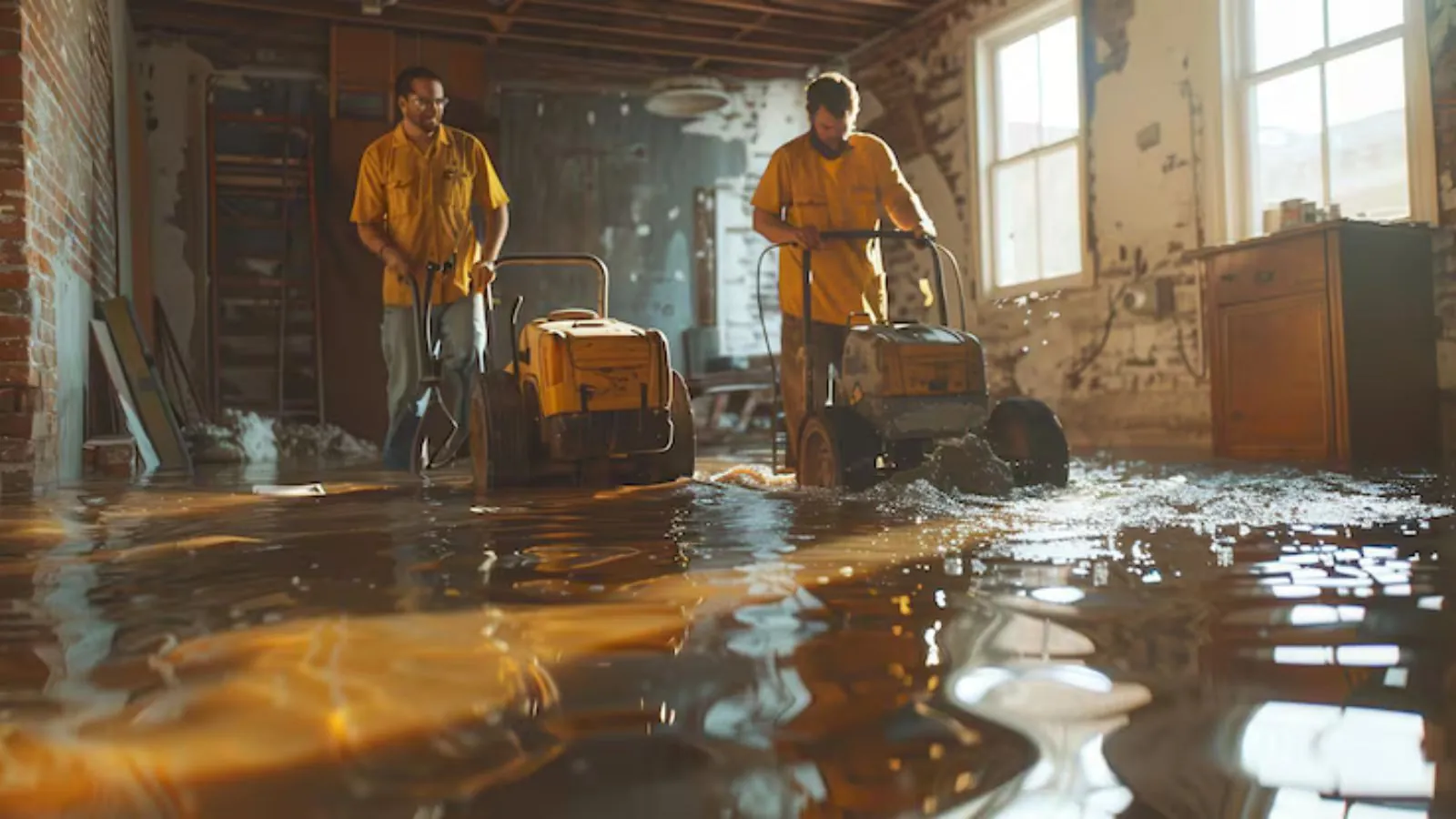
Water extraction is the first step of water damage restoration in Oswego, and it is time-critical. Extraction means physically removing standing and pooled water with submersible pumps, portable extractors and wet vacuums before any drying equipment goes in. A dehumidifier cannot dry a floor that is still under an inch of water, so extraction comes first and every later step depends on it.
If you are reading this with water on the floor, the emergency line is open 24/7. Nights, weekends and holidays are the normal hours for a failed sump pump or a split supply line, not the exception.
When water is standing in the house right now
Water does not stay where it lands. In a finished room it runs under baseboards, into the bottom edge of drywall and through flooring seams, then wicks upward through paper-faced drywall. The longer it stands, the more material has to be torn out instead of dried. While you wait for the crew, work through this list:
- Stop the source if you can reach the valve without stepping in water. The main shutoff is usually where the water line enters the house.
- Take wide and close photographs before anything is moved, and note the time you found the water.
- Lift small furniture and boxes onto blocks or counters. Do not drag heavy pieces across wet carpet.
- Open interior doors so we can see the full spread when we arrive.
Electrical safety first
Water and electricity in the same room is the one hazard that cannot wait for us to arrive.
- Do not walk through water that touches outlets, power strips, appliances or extension cords.
- Switch power off at the panel only if the panel is dry and you can reach it without standing in water. Otherwise call and leave the room.
- Never run a household vacuum or fan on standing water.
What extraction actually involves
The method depends on the depth and what the water is sitting on. We match the tool to the job instead of running one machine everywhere:
| Equipment | Where it is used | What it does |
|---|---|---|
| Submersible pump | Basements and rooms with more than a couple of inches of water | Moves large volumes quickly through a discharge hose. |
| Portable extractor | Saturated carpet and carpet pad | Pulls water up out of the fibers and pad. |
| Wet vacuum | Corners, stairs and edges the pump cannot reach | Removes the last film of water. |
| Moisture meter and thermal camera | After the visible water is gone | Finds water still inside walls and under floors. |
Once the standing water is out, we map moisture with a meter and thermal camera, because a room can look dry while the wall behind it is still wet. That map decides what stays in place and what is removed. The follow-on work is covered on the structural drying page.
Clean water, gray water and black water change the job
The IICRC S500 standard sorts water by contamination. Category 1 comes from a clean source such as a supply line. Category 2 is gray water, for example from a dishwasher or washing machine. Category 3 is grossly contaminated, such as sewage or river floodwater. The category decides whether carpet can be saved, whether porous materials come out and what protective gear is needed.
If your water came from a drain or the ground, read the sewage backup page or the flood damage page before you touch it.
Save it or remove it: honest trade-offs
Carpet that was wet with clean water for a short time can often be extracted and dried in place. The pad underneath is usually replaced because it holds water and is cheap compared with the floor above it. Hardwood and engineered flooring behave differently and may need drying mats. Drywall that wicked water more than a foot up usually comes out. We tell you which is which with meter readings in front of you, not on a hunch.
If you live in the unincorporated community next door, our Boulder Hill page explains who handles what and how we help.
What Oswego rain does to a house
The Illinois State Climatologist reported that April 2013 brought 6.90 inches of rain to Illinois, 3.13 inches above the April average, and Kendall County was declared a disaster area. The point for a homeowner is that a sump pump that handled one storm may not keep up with weeks of saturated ground.
Most Oswego houses are single-family homes built since 1990, and many have finished lower levels. When extraction reaches a carpeted, drywalled basement, the job is usually extraction, pad removal and cutting the wet bottom of the walls, so tell us whether your lower level is finished when you call.
Water extraction is also the starting point for burst pipe cleanup and basement water damage. Your insurance policy may cover sudden losses and may not cover groundwater, so photograph everything and ask your agent which category applies. We document the work so the claim has records behind it.
Questions about water extraction
Yes. The emergency line is open 24/7, including holidays. Call with the address and a short description of where the water is, and we will tell you what to shut off while we get set up.
Removing standing water usually takes hours rather than days, depending on depth and square footage. Drying the structure afterward takes longer and is measured with moisture readings, not a clock.
Sometimes. Carpet exposed to clean water for a short time can often be extracted and dried in place, while the pad is usually replaced. Water that came from a drain or the ground changes that answer.
No. Extraction removes water you can see, and drying removes the moisture that has gone into materials. Both are needed, and extraction has to happen first.
Call the Village of Oswego Public Works at (630) 554-3242 about the main or the street, and call us about the water that has already reached your house.