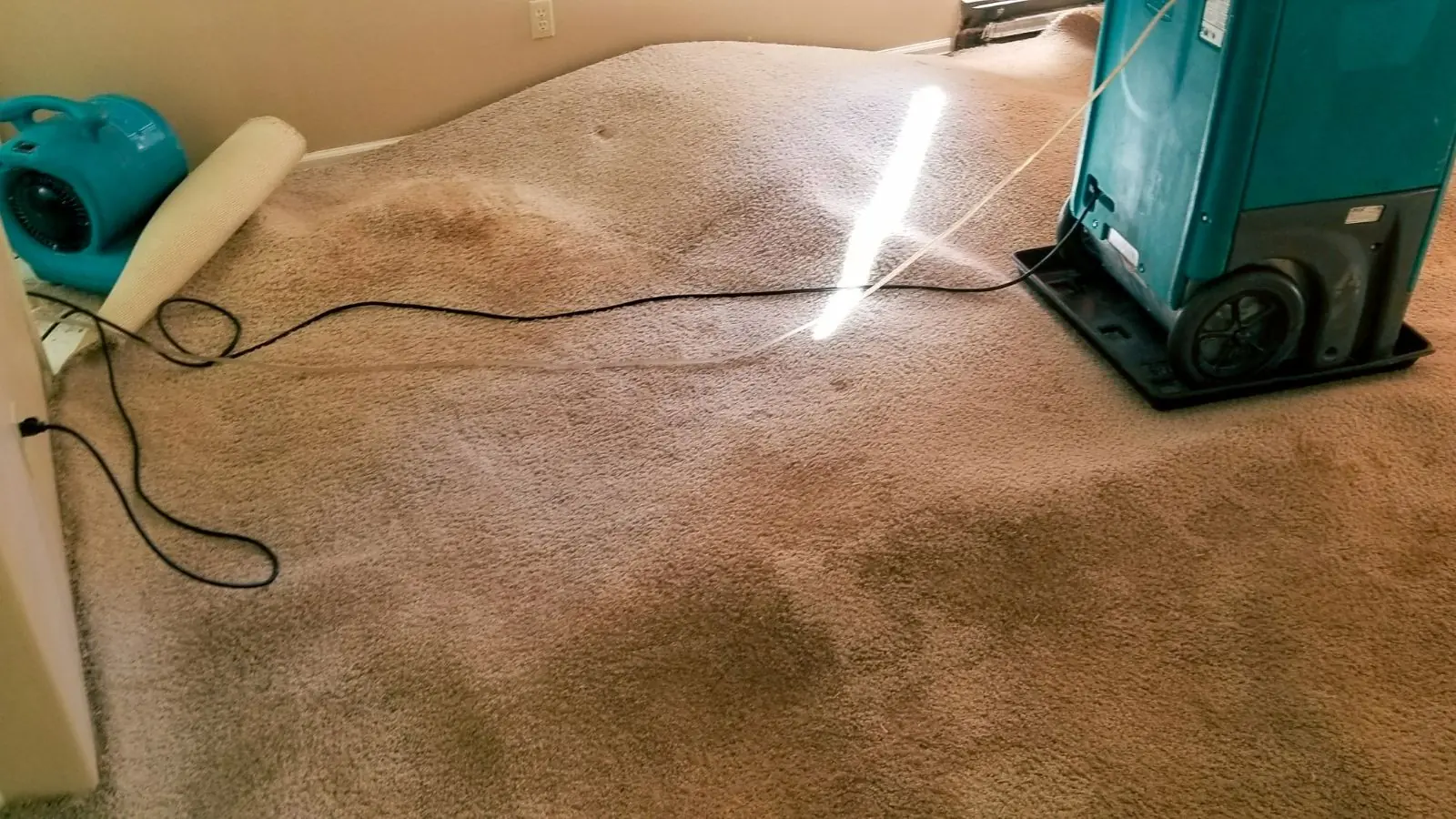
Basement water damage cleanup in Oswego usually starts with an emergency call, because lower levels fill and soak quickly. The common causes are a sump pump that fails during heavy rain, seepage through a wall or floor joint, a split supply line or a water heater and a drain backup. The first decision is whether the water is clean, gray or contaminated, because it changes what is removed.
Finished or unfinished: why the answer matters
An unfinished basement with a concrete floor and bare studs is mostly an extraction and drying job. A finished basement adds drywall, carpet and pad, trim and insulation that wick and hold water. Housing data from the Chicago Metropolitan Agency for Planning shows that most Oswego homes were built between 1990 and 2009, and many of those have finished lower levels. Tell us what is down there when you call so we bring the right equipment.
Emergency steps while you wait for help
- Stop the source if it is a supply line, and turn off the water heater if it is leaking.
- Keep power off in the basement if the panel or outlets could be wet. Never wade through water to reach them.
- Move items to higher ground, starting with documents and electronics.
- Photograph the water line on the walls and the damaged contents.
Do not enter a flooded basement with power on
- Basement water can carry electricity from outlets, sump pumps and appliances.
- Floodwater and sewage can hide bacteria. Wear boots and gloves if you must enter.
- Do not use a household vacuum.
How basement cleanup works
We extract the water, then remove porous materials that cannot be dried safely: soaked pad, wet insulation and drywall that wicked water. We cut the wall a few inches above the wet line, check studs with a moisture meter, then place air movers and low-grain refrigerant dehumidifiers. Basements are tough to dry because the concrete holds moisture, so drying takes days and the dehumidifiers matter as much as the fans.
If the water came from a drain, the same crew follows contamination procedures from the sewage backup page.
| Cause | Typical signs | First move |
|---|---|---|
| Sump pump failure | Water rising at the pit, often during heavy rain | Check power and the discharge line, then call. |
| Wall or floor seepage | Damp lines along the wall base or floor cracks | Document and call. Seepage continues after storms. |
| Supply line break | Water from a ceiling or utility room | Shut off the main water valve. |
| Drain backup | Dirty water at floor drains or toilets | Stay out and call. Treat it as contaminated. |
Basements in Oswego and Sugar Grove
Both Oswego and nearby Sugar Grove have housing stock dominated by single-family houses built since 1990. Water table and rain events matter more than age here. Sugar Grove restricts sump discharge onto village rights of way from November 1 to May 1 and requires a permit to tap the storm sewer, so where your sump discharges is a code question as well as a drainage one. If you are in town limits, see the Sugar Grove page.
Basement water in this area has a documented history. The page for Heritage of Oswego explains a 1996 creek flood that reached basements, and why that is context rather than a forecast.
Rain, creeks and the water table
In April 2013 Illinois recorded 6.90 inches of rain, 3.13 above the 3.77-inch average, according to the Illinois State Climatologist. A month of rain like that fills the ground, and sump pumps run constantly. If your pump runs often, ask a plumber about a battery backup, since the main protection is the pump itself.
The Village of Oswego publishes FEMA flood maps. Check them if your lot is near the Fox River or Waubonsee Creek, since coverage for flood is separate from homeowners insurance.
Standard homeowners policies typically exclude flood and sometimes limit sump and drain backup, so ask your agent about a water backup endorsement. After cleanup, read mold remediation if the basement smells musty, and structural drying for how we confirm dryness.
Questions about basement water damage
Yes. Basement flooding often happens during storms at night. The line is open 24/7.
Growth can start within a couple of days when materials stay wet. Fast extraction and drying are what prevent it.
Not necessarily. Wet carpet pad and the bottom of drywall often come out, but we use meters to decide how far to go.
It depends on your policy and any water backup endorsement. Standard policies often exclude groundwater and sump overflow. Ask your agent.
In Sugar Grove, discharge onto rights of way is barred from November 1 to May 1. Check your village code before rerouting it.