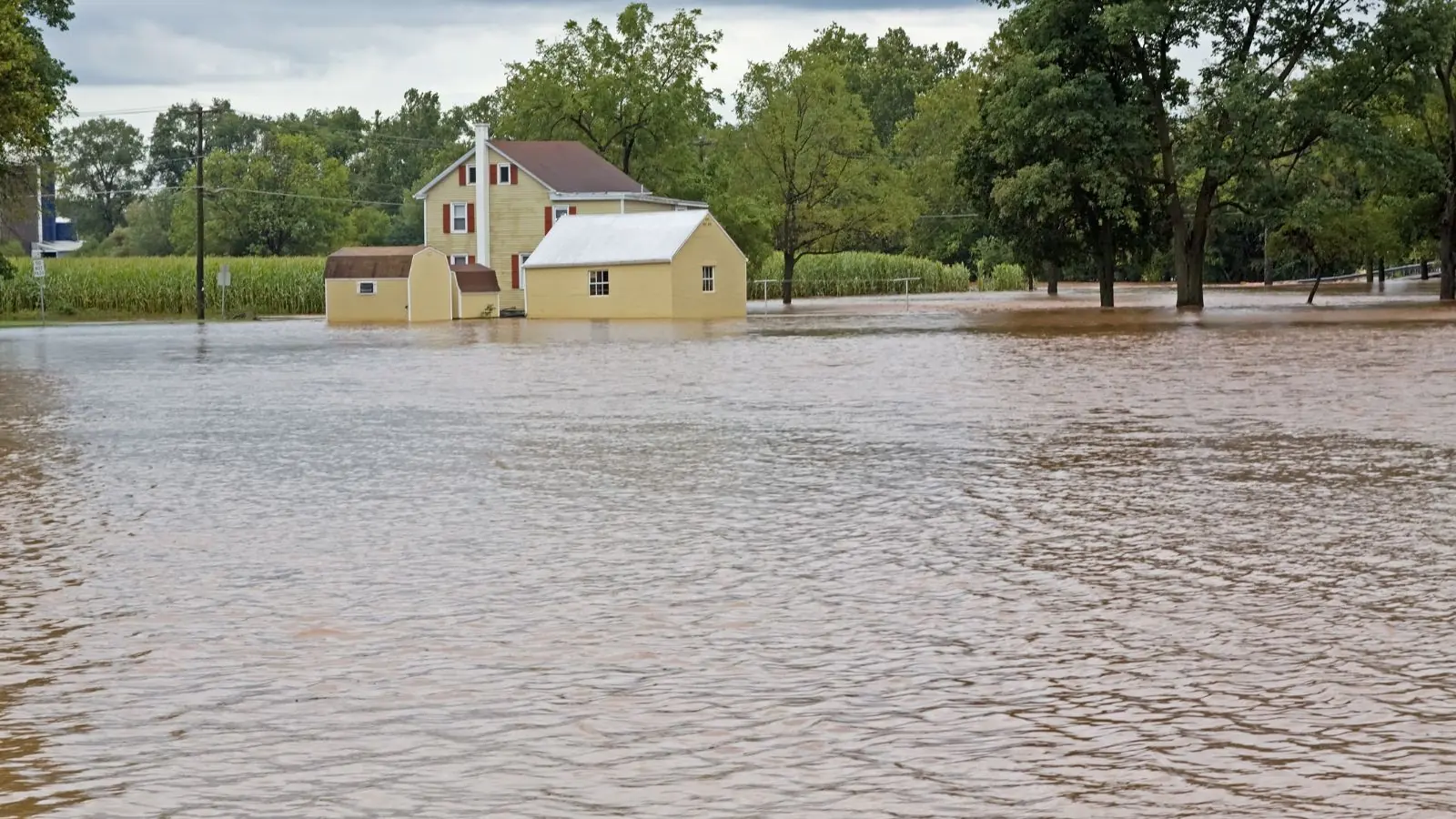
Storm water damage cleanup in Oswego covers water that got into the house because of weather: rain driven through a damaged roof, water behind siding, runoff that overwhelmed a drain and ice dams that backed meltwater under shingles. It often arrives with other hazards, so safety comes first. Our emergency line is open 24/7 during and after storms.
Storm emergency: while the storm is still going
Storm safety
Safety comes before cleanup.
- Stay away from downed power lines and call 911.
- Do not enter flooded rooms with power on.
- If a ceiling is sagging with water, stay out from under it.
- If you smell gas, leave and call Nicor at 888-642-6748, then 911.
Once it is safe, photograph the damage, move valuables out of the wet area and place buckets under drips. A roofer can cover the opening temporarily, which stops further water, and we handle the inside. Do not climb on a wet roof.
Where storm water goes inside the house
Roof and attic
Water enters at damaged shingles or flashing and soaks insulation and the ceiling below.
Walls
Wind-driven rain gets behind siding or around windows and runs down the cavity.
Basement
Runoff and a high water table push water through walls, window wells and floor joints.
Ice dams
Melting snow refreezes at the eave and forces water under shingles. It shows up as ceiling stains.
Roof water that has passed through attic insulation is no longer clean. We treat storm water as Category 2 or 3 depending on the source and what it touched. Wet insulation, carpet and pad usually come out. Hard surfaces are cleaned and dried. See ceiling water damage repair and basement water damage for the details of each.
The cleanup
We extract the water, remove wet insulation and drywall that cannot be dried, and set air movers and dehumidifiers. Moisture mapping covers the attic, walls and floors, because storm water often travels farther than the visible stain. We also document damage with photographs and readings to support your claim.
Documenting storm damage for the insurer
Take photographs of the roof, siding, windows and gutters from the ground, and of every wet room inside. Include wide shots that show the location. Keep a written list of damaged contents. If a roofer tarps the roof, keep the invoice, because temporary repairs are generally part of protecting the property. Moisture readings from our visit show what was wet and when, which helps connect the interior damage to the storm.
Mud and debris are a separate issue after runoff. If the water left silt on the floor, the cleanup includes removing it before drying, because silt holds moisture against flooring. Wear gloves and boots and keep children out of the area.
Oswego storm history
In July 1996 more than 16 inches of rain fell in 24 hours across northern Kendall and southern Kane counties, a state record, and Oswego and Little Rock townships were hard hit. In April 2013 Kendall County was declared a disaster area after an Illinois April with 6.90 inches of rain. The takeaway is that storm water here is a recurring event, so it makes sense to check your gutters, downspouts, grading and sump pump before spring.
Oswego homes built since 1990 usually have shingled gable roofs and finished basements. That mix means roof leaks end up in attics and ceilings and runoff ends up in basements. Check both after severe weather.
Wind and hail damage is generally covered by homeowners insurance, while flood damage is usually excluded and needs a separate policy, according to the Illinois Department of Insurance. Report storm damage promptly because insurers set time limits. For floodwater that entered at ground level, see flood damage cleanup.
Questions about storm water damage
Yes. The line is open 24/7, including during storms.
No. Climbing a wet roof is dangerous. Call a roofer for temporary covering.
Look for icicles along the eave, water stains on ceilings near exterior walls and ice buildup at the roof edge.
Wind and hail damage often is. Flood is usually excluded. Ask your agent.
As soon as it is safe. Water that sits in insulation and drywall causes more damage each day.