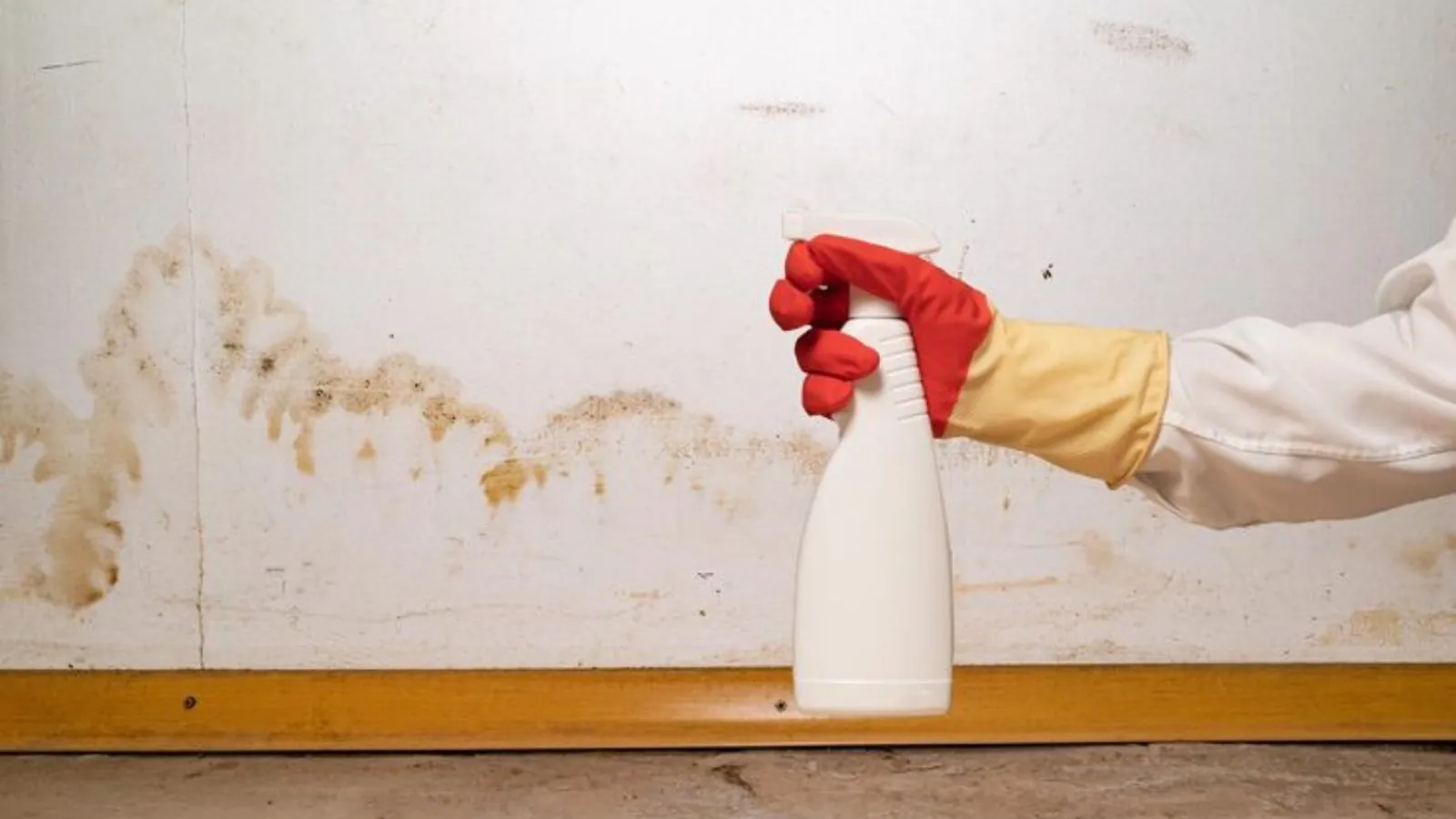
Mold remediation in Oswego is the secondary service we offer after water damage, because mold nearly always follows water that was not dried in time. Remediation means finding the moisture source, containing the affected area, removing contaminated porous materials, cleaning the rest and verifying that the space is ready for rebuilding. It is a process with steps, not a spray.
Musty smell or dark spots after a leak?
These are the usual reasons people call about mold:
Musty odor
A smell that appears after a leak or on humid days, even when nothing is visible.
Dark or fuzzy spots
Growth on drywall, ceiling tiles, baseboards or the underside of carpet.
Peeling paint or warped trim
Moisture inside the wall that shows at the surface.
A leak that was never dried
Old water damage that was patched or painted over.
Mold needs moisture, so the first question is always where the water is coming from. If the source is still active, remediation will fail until it is fixed. We check with a moisture meter and thermal camera. If you can see a large area of growth, do not disturb it. Brushing or sanding releases spores into the air.
Before you call
- Do not run fans or the HVAC across a moldy area. That spreads spores.
- Do not sand, scrape or bleach large areas of growth.
- Wear an N95 respirator and gloves if you must enter, and keep children and pets away.
- If anyone in the house has health concerns, talk to their doctor about their situation.
How mold remediation works
- Find and fix the moisture source, then dry the structure.
- Set up containment with plastic sheeting and negative air so spores stay in the work zone.
- Remove porous materials that cannot be cleaned, such as drywall, insulation and carpet.
- Clean framing and hard surfaces with HEPA vacuuming and wiping.
- Run HEPA air scrubbers during and after the work.
- Verify the result before rebuilding.
The industry reference is the IICRC S520 standard for professional mold remediation. It sets the idea that the work is done when the area is physically clean, dry and free of visible growth and odor. It does not promise that mold will never appear again in a house, because spores are present in normal indoor air and any damp spot can grow again.
What you can control is moisture, and the repair does not end until the structure reads dry. See structural drying for that part.
Testing and verification
Testing is a separate question from remediation. A third-party assessor who does not profit from the cleanup can take samples and give you an independent opinion. Some owners, lenders or insurers ask for a clearance report. We can work with your assessor. If the cost of testing worries you, ask what exactly is being measured and what the result will change.
| Question to ask | Why it matters |
|---|---|
| Is the contractor registered with the state, and can they show it? | Illinois has a Mold Remediation Registration Act, and the IDPH site lists current requirements. |
| Will you fix or identify the moisture source? | Remediation without that fails. |
| What containment will be used? | Spores spread when dust is disturbed. |
| What happens when the work is done? | Ask about visual checks and any independent clearance. |
Mold and Oswego houses
Illinois has a Mold Remediation Registration Act (410 ILCS 105), updated by Public Act 103-0893, which directs the Illinois Department of Public Health to build a registration program for remediators. Check the IDPH website for the current requirements and ask any contractor, including us, about registration.
The Chicago Metropolitan Agency for Planning counts about 12,440 homes in Oswego, mostly built since 1990. Basements, bath fans that vent into attics and old leaks in finished lower levels are the usual places for growth to start.
Insurance policies often limit mold coverage, and some exclude it unless it follows a covered water loss. Ask your agent before work begins and keep photographs. For basements, see basement water damage, and for ceilings see ceiling water damage repair.
Questions about mold remediation
Moisture trapped in drywall, insulation or flooring can produce odor even when nothing is visible. A meter reading finds it.
Look for dark or fuzzy spots, a musty smell and moisture stains. A meter and, if needed, a third-party assessor can confirm.
Not always. Testing is a choice, sometimes requested by owners, lenders or insurers.
Remediation removes existing growth and fixes the conditions. Spores exist in normal air, so keeping the area dry is what keeps it clean.
Ask about it and check the IDPH site for current requirements.