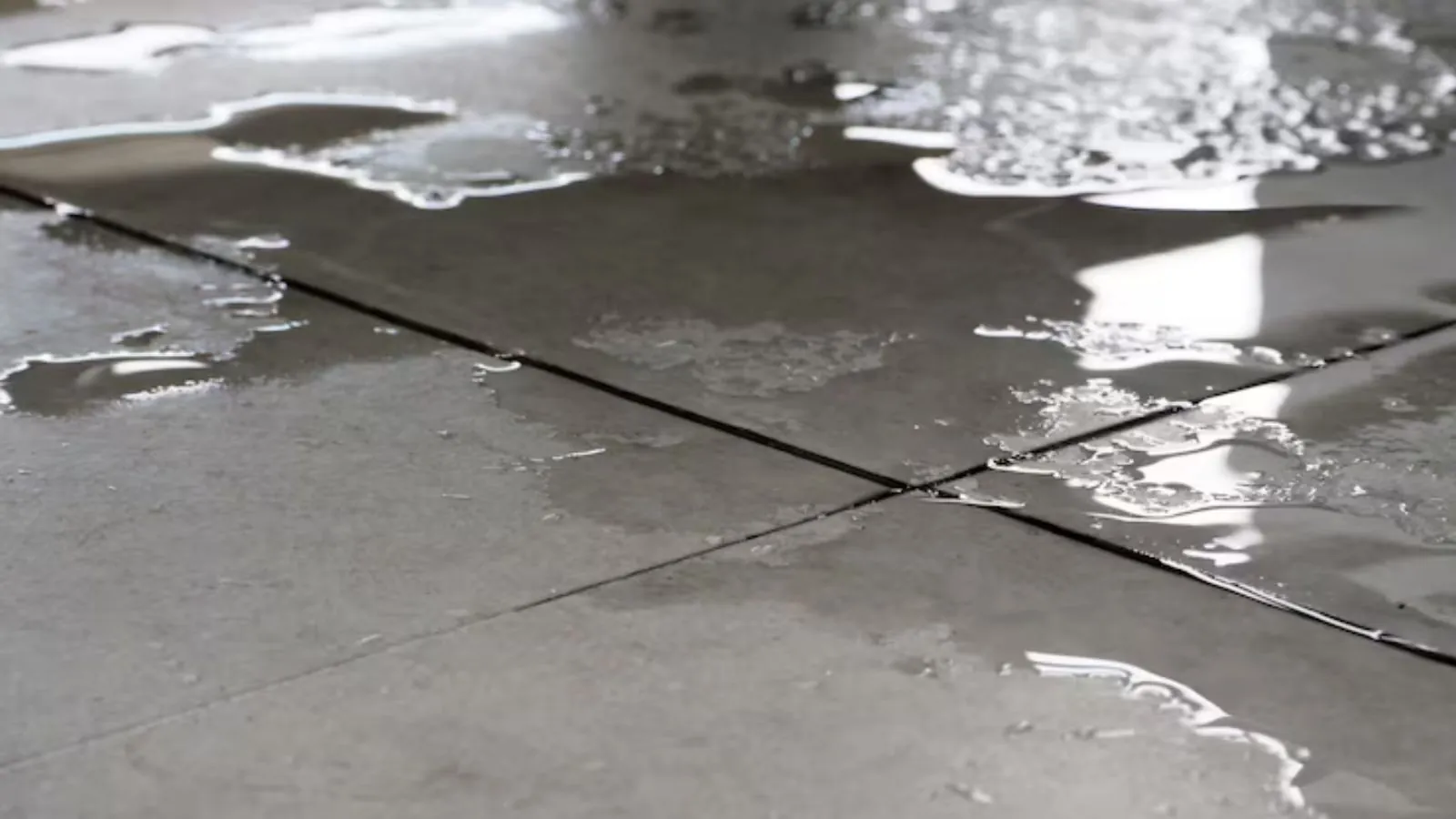
Slab leak water damage in Oswego happens when a pressurized water line under the concrete slab leaks into the soil, the slab or the floor above. Most Oswego homes have basements rather than slabs, so slab leaks are less common here than in slab-on-grade regions, but they do occur in garages, additions, finished basement floors and some commercial buildings. A slab leak can become an emergency when water reaches the surface and spreads.
Warm spot on the floor, or a water bill that keeps climbing?
These are the main symptoms of a slab leak:
Warm or hot spot on the floor
A hot water line leaking beneath the slab can warm the surface above it.
Sound of running water
You hear water when every fixture is off.
Water meter spinning
If the meter moves with all fixtures off, water is leaving the system.
Damp carpet or cracked tile
Moisture comes up through the slab or at the baseboard.
A sudden jump in your water bill is also a sign. The Village of Oswego Utility Billing office at (630) 554-2282 can explain your usage history. Call a plumber to pressure test the lines. We handle the water damage and drying that follow.
Emergency steps if you suspect a slab leak
- Turn off all fixtures and check the water meter. If it moves, water is leaking.
- Close the main shutoff. If the meter stops moving, the leak is inside.
- Call a plumber to locate the leak with acoustic or thermal equipment.
- Call us for water removal and drying if the floor is wet.
Hot and electrical hazards
Water under a slab can reach outlets in the wall above.
- A hot water slab leak can scald. Keep children and pets away from warm wet spots.
- Do not use electrical equipment on wet floors. Shut off circuits that serve wet areas.
Repair choices and trade-offs
| Option | What it involves | Trade-off |
|---|---|---|
| Spot repair | Break the slab at the leak and replace the section | Direct, but disruptive and the line may leak again elsewhere. |
| Reroute | Run new lines overhead or through walls | Avoids the slab but needs walls opened. |
| Repipe | Replace the whole run | Highest cost, fewer repeat leaks. |
The plumber chooses the repair. We dry the surrounding materials with air movers and dehumidifiers, remove wet carpet or drywall where needed and document moisture levels. See structural drying for how the equipment works.
How plumbers locate a slab leak
A plumber will usually start with a pressure test to confirm the leak is on the pressurized side, then use acoustic listening equipment or thermal imaging to pinpoint where the water is escaping. Cameras can check drain lines. The point is to open the smallest possible area of slab rather than guess, because every extra square foot of concrete you break is a square foot you have to repair.
What happens to the floor above
Moisture under flooring has nowhere to go. Sealed floors such as vinyl and tile trap it, carpet pad wicks it, and wood floors cup. We test each layer with a meter, lift sections where readings are high and set drying equipment to pull moisture up and out. Concrete itself dries slowly, so we track it over days instead of declaring victory when the surface feels dry.
A slab leak that runs long enough can also undermine the soil under a slab and cause settling. If you see new cracks, a sloping floor or doors that stick after a leak, mention it to your plumber and your insurer.
Once the plumber has stopped the leak, we dry the affected materials to the IICRC S500 standard. Because concrete holds moisture for a long time, we record readings of the slab and the flooring above it over several days and keep drying until they are stable.
Where Oswego has slabs
The Chicago Metropolitan Agency for Planning counts about 12,440 housing units in Oswego, and 90 percent are single-family homes. Many of them have basements, which means water lines run in joists above the floor, but garages, additions and some townhomes have slab floors.
Call JULIE at 811 before any digging, because a plumber breaking a slab or trenching outside may hit buried utilities.
Insurance coverage for slab leaks varies. Some policies cover the resulting water damage but not the cost of reaching the pipe. Ask your agent before work starts.
Questions about slab leak water damage
Yes. We answer 24/7. If water reaches the surface, shut off the main and call.
A hot water line leaking under the slab can warm the surface above it. A plumber can confirm.
Turn off every fixture and watch the meter. If it moves, water is escaping somewhere.
A plumber repairs the pipe. We dry and restore the affected area.
It depends on the policy. Resulting damage is often covered, and access costs sometimes are not.