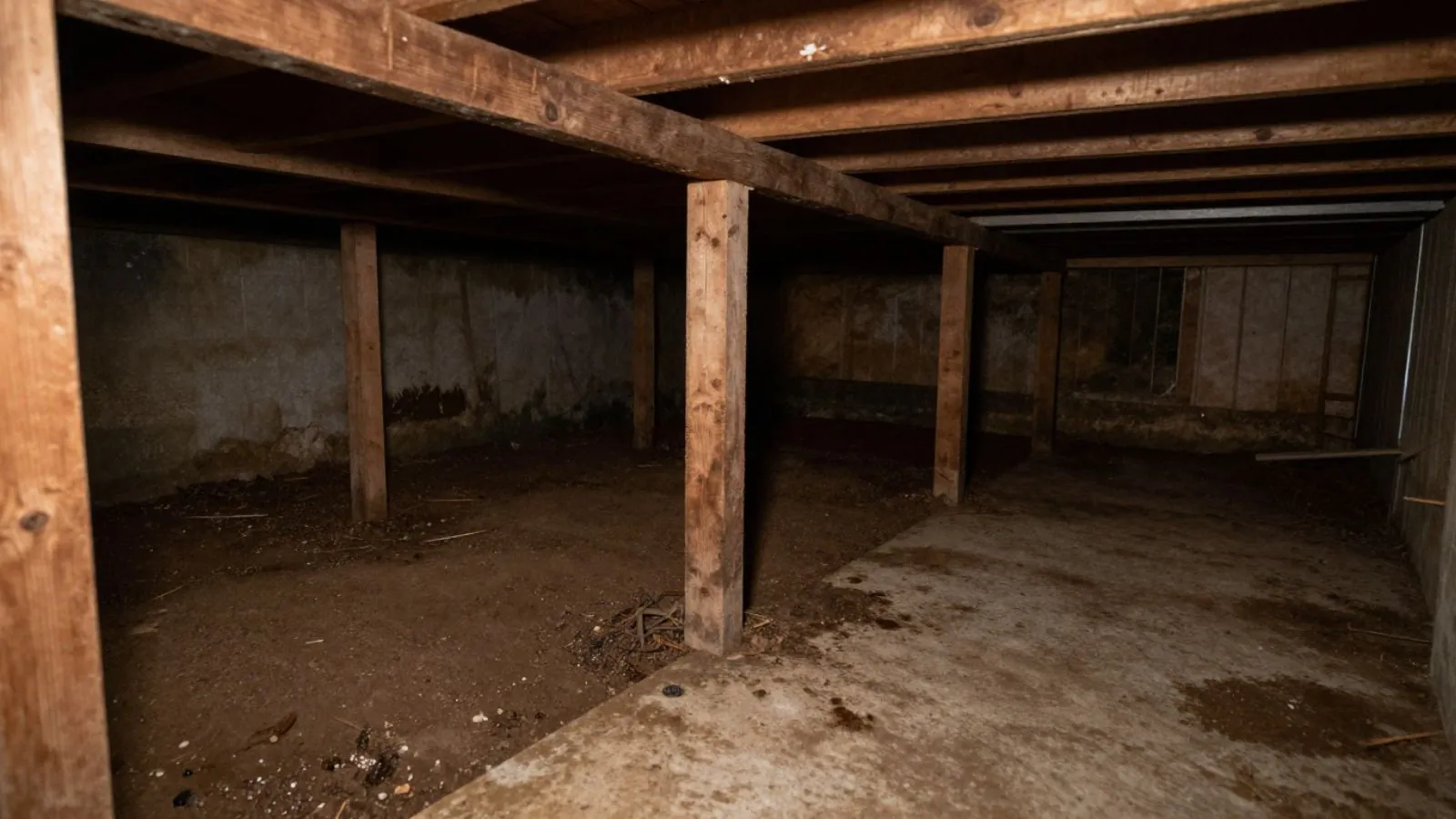
Crawl space water damage in Oswego is easy to miss because nobody goes down there. Most local homes have full basements, but crawl spaces exist under additions, porches, bump-outs and some older houses. When a pipe leaks, groundwater enters or a vent lets in humid air, the water stays below the floor, soaks insulation and joists and sends damp air into the house.
Signs of crawl space moisture
- Cold, soft or bouncy floors above a crawl space.
- Musty odor in rooms above it.
- Condensation on ducts or pipes under the floor.
- Insulation sagging from the joists.
- Standing water or damp soil after rain.
Entering a crawl space
- Do not enter a crawl space with standing water if any wiring or equipment is exposed.
- Tight spaces can hold poor air. Do not go in alone or stay long.
- If the water looks dark or smells of sewage, treat it as contaminated and call.
Where the water comes from
The sources are mostly the same ones that affect basements: plumbing leaks, groundwater, surface water and condensation. A leaking supply line or drain above the crawl space drips onto the soil, while a high water table and poor grading push water in through the foundation. Open vents on a humid day add moisture that condenses on cooler surfaces.
| Source | Clue | Fix path |
|---|---|---|
| Plumbing leak | Drips or damp spot under a bath or kitchen | Plumber repairs line, we dry. |
| Groundwater | Water after heavy rain | Grading, drainage or sump. |
| Condensation | Beads on ducts and joists in summer | Vapor barrier and humidity control. |
| Roof or gutter runoff | Water along one wall | Downspout and grading correction. |
How we dry a crawl space
We pump out standing water, remove wet insulation that has sagged or soaked, and dry joists and subfloor with air movers and dehumidifiers placed to reach tight spaces. A moisture meter on the joists tells us when they have dried, and a camera or probe checks the subfloor. A vapor barrier on the soil limits future evaporation.
Chronic crawl space water may need drainage work or a sump, which a contractor handles. If the water is contaminated, see sewage backup cleanup.
What happens if it stays wet
Wood framing that stays damp invites rot and growth, and the damp air rises into the living space. If you smell must upstairs and the crawl space is wet, plan for mold remediation after drying. Quick action keeps the repair smaller.
What to tell us on the phone
Crawl space calls go better when we know the access point, the depth of the water and whether the space is dirt, gravel or concrete. Tell us whether you can see ducts, pipes or insulation, and whether any water is moving. That lets us bring the right pumps and the right size of crew for a tight space.
Where Oswego crawl spaces are
The Chicago Metropolitan Agency for Planning counts about 12,440 housing units in Oswego, and the median home dates to 2002, so crawl spaces are not the norm. They show up under additions and sunrooms, so check the lowest, least visited part of your house after a heavy rain.
Waubonsee Creek and the Fox River, along with the Village of Oswego flood maps issued in 2014, are the references for flood risk. A crawl space near them takes on water faster than one on high ground.
Standard homeowners policies typically exclude groundwater and flood, per the Illinois Department of Insurance, so ask your agent what applies. For wider water in the lower level, see basement water damage.
Questions about crawl space water damage
Look for a musty odor, soft floors, sagging insulation or standing water after rain. A moisture meter confirms it.
Not with standing water near wiring, and not if the water may be contaminated. Call a professional.
Yes. We remove water and wet insulation and dry the joists and subfloor with air movers and dehumidifiers.
It limits evaporation from the soil. It does not fix groundwater entry.
Yes. The line is open 24/7 for active water.