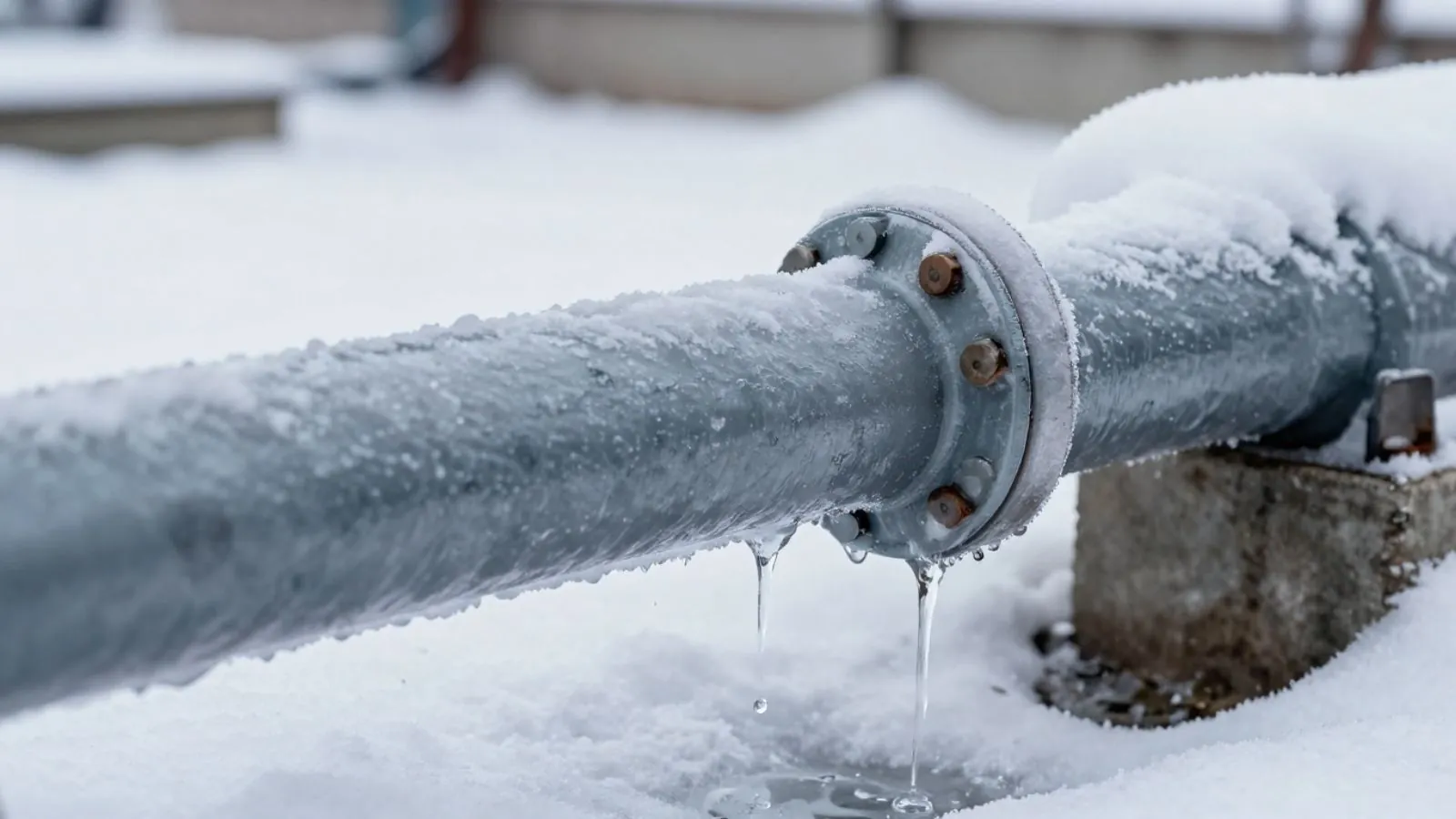
Frozen pipe water damage in Oswego usually shows up after the cold breaks, not during it. Ice expands inside a copper or plastic line and cracks it, but the ice plug can hold the water back until it melts. Then the split opens and the water comes through a wall, a ceiling or a crawl space you were not watching. If your pipes froze last night and the house is warming up this morning, treat it as a possible emergency.
Signs a pipe froze and may have split
Faucet runs dry or trickles
A frozen section between the shutoff and the faucet. Do not assume it is only frozen.
Frost on a pipe or a bulge
Visible frost or a swelling pipe means pressure is building.
Damp spot, stain or sound
A new stain on a ceiling or a hiss inside a wall after a thaw points to a split.
Odd smell or sagging drywall
Wet drywall holds odor and sags before it fails.
If you find any of these, close the main water valve before you try to thaw anything. Thawing a split pipe with the water on is how a small crack becomes a flood.
Emergency steps before the thaw finishes
- Shut off the main water supply and open the affected faucet.
- Open cabinet doors under sinks on exterior walls so room air reaches the pipes.
- Use a hair dryer on low or a heating pad on a frozen section. Never use a torch or open flame.
- If you cannot find the frozen section, or if a pipe is already leaking, call. Do not wait for a full thaw.
Heat sources and electricity
Thawing is the point where people get hurt.
- Do not use a space heater near wet floors or standing water.
- Never use an open flame, propane torch or heat gun on a pipe inside a wall.
- Keep extension cords out of water and away from damp insulation.
How we handle the water after a freeze
Our crew finds the split, if your plumber has not already, and extracts water from the surrounding floor. Then we open the cavity enough to see insulation and framing. Wet fiberglass insulation can hold water against wood, so it usually comes out. We then dry with air movers and dehumidifiers and log the readings until the wall cavities read dry. Read more on water extraction and structural drying for the equipment details.
Cold-weather exposure in the Fox Valley
Chicago-area climate normals from the National Weather Service count about 121 days a year with an overnight low at or below 32 degrees, including about 28 such days in January and 25 in December. That is regional data rather than an Oswego reading, but it is why pipes in unheated garages, exterior walls and uninsulated crawl spaces are at risk here every winter.
Newer construction does not make a house immune, because supply lines on exterior walls and in garage ceilings are the usual weak points in any home.
Insulation, heat tape and other fixes for next winter
Once the damage is dry, ask your plumber about the cause. Pipes in an exterior wall can often be rerouted or insulated from the cold side, garage supply lines can be wrapped, and heat cable made for pipes can protect a vulnerable run. Foam sleeves cost little. Seal air leaks where lines pass through the rim joist, because a draft on a pipe is worse than steady cold.
We use the IICRC S500 standard to classify the water after a freeze. Clean supply water is Category 1, and the standard explains why it can move to Category 2 if wet insulation and framing sit for a day or two. That is the practical reason to call before the thaw finishes.
Late-1990s homes in Fox Chase are the sort of age where a thaw can reveal a split line. That page lists what to check first.
Before the next freeze
If you plan to be away in January, leave the heat on and set the thermostat no lower than 55 degrees. Let a faucet drip on exterior walls if the forecast is severe. Know where your main shutoff is.
Call JULIE at 811 before any digging. A frozen service line outside the house is a separate problem from a frozen pipe inside it, and the village or a plumber handles the outside piece.
Frozen pipe losses are often covered because the freeze is sudden, but insurers can deny a loss if the heat was off. Keep your thermostat records and receipts. For a break in a main line, see burst pipe water damage.
Questions about frozen pipe water damage
Yes. Calls are answered 24/7, including cold snaps and holidays. Shut off the main valve first, then call.
Only if you have shut off the water and no leak is visible. Use gentle heat such as a hair dryer. If any water appears, stop and call.
A stain, a drip, a damp wall or a hiss after the thaw usually means the pipe split. A moisture meter confirms it behind walls.
Often yes, because it is sudden, but policies vary. Insurers may ask whether the heat was on. Check your policy and keep your records.
Insulate exposed lines, seal drafts and keep the garage door closed during severe cold. If you can, leave a faucet dripping on the coldest nights.