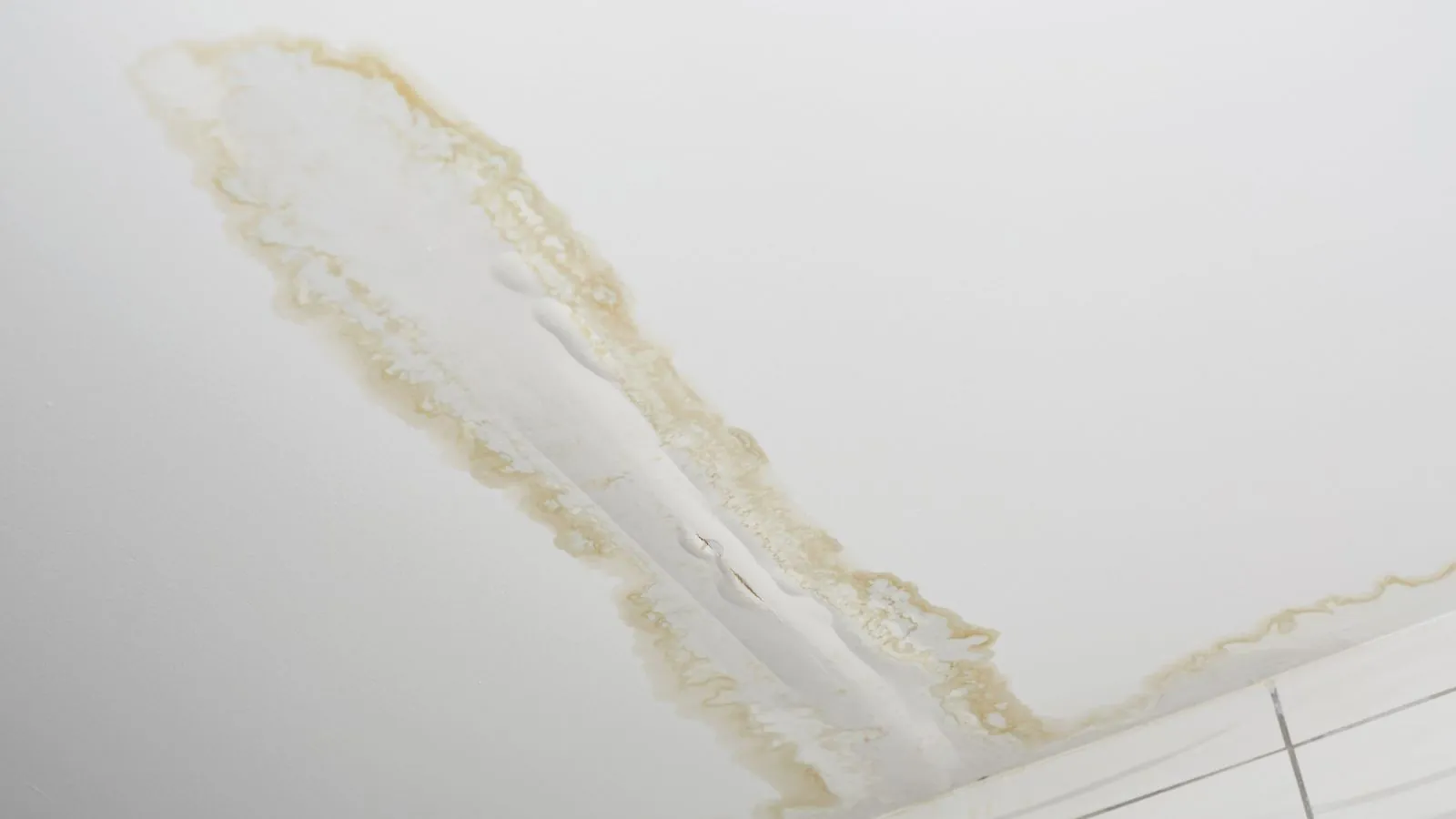
Ceiling water damage repair in Oswego begins with finding where the water is coming from, because the stain is rarely under the leak. Water travels along joists and pipes before it shows up, so a spot in the living room can come from a bathroom, a roof penetration or an HVAC line across the house. A bulging ceiling is an emergency. It holds weight in water and can drop without warning.
A bulging ceiling is an emergency: stay clear
Stay clear of a wet ceiling
- Do not stand under a ceiling that is sagging or bulging.
- If water is dripping near a light fixture or fan, turn the circuit off at the panel from a dry spot and do not use the fixture.
- Place a bucket under a drip and move furniture away.
- If the bulge is large, a small hole at its lowest point can release water in a controlled way. Do this only from a safe angle with a bucket ready, and call if unsure.
Our emergency line is open 24/7, and ceiling failures are common after storms and plumbing breaks at night. Tell us what is above the ceiling: a bathroom, a laundry, an attic or a roof. That tells us which source to trace.
Where ceiling leaks come from
Roof or flashing
Water enters at a vent, chimney or flashing and runs along the decking before it drips.
Upstairs plumbing
A supply line, drain or shower pan leaks into the floor cavity above the ceiling.
HVAC condensate
A clogged or overflowing drain line from an air handler in the attic.
Ice dams
Melting snow backs up under shingles and enters at the eave. See storm water damage.
How we dry and repair a ceiling
We extract any water on the floor, then cut a controlled opening to relieve trapped water and let air reach the cavity. Wet insulation above a ceiling is usually removed because it holds water against the drywall. Moisture meters and thermal imaging show how far the water spread across the joists. After the cavity is dry, drywall patching, texturing and paint close the repair.
We handle the water side and coordinate with your roofer or plumber on the source. The damaged wall edges are covered on wall and drywall water damage.
| Condition | Typical approach | Trade-off |
|---|---|---|
| Light stain, no sag | Find the source, dry the cavity, prime and paint | Stain blocking primer needed so it does not return. |
| Sag or soft drywall | Cut out and replace the wet section | Higher repair cost, but drywall will not recover. |
| Wet insulation | Remove and replace after drying | Insulation holds water and invites growth. |
| Repeated stains | Trace the source before repairs | Painting over an active leak wastes the repair. |
How to read a ceiling stain
The shape of a stain tells part of the story. A brown ring with a darker edge often means the leak runs on and off, because each wet-and-dry cycle leaves another ring. A uniform yellow patch with a soft center suggests a steady supply. A stain that grows after rain points to the roof, while one that grows after a shower or a washing machine cycle points to plumbing.
None of this replaces a moisture meter, but it helps you tell us what to look for.
Above the ceiling, wet insulation can sag and press the drywall down, which is why a small stain can hide a large wet area. Thermal imaging shows the cooler, wetter pockets without cutting anything. Where the stain is below an attic, we also look at the underside of the roof deck and at bath fan ducts. A duct that dumps warm humid air into the attic can condense on cold framing and drip with no roof leak at all.
Matching texture and paint after repair
Patching drywall is the easy part. Matching an orange-peel, knockdown or smooth finish across a ceiling takes feathering beyond the patch edge, and a full-ceiling repaint is often the cleanest result. We tell you up front if a spot repair will show under raking light, so you can decide between a patch and repainting the whole plane.
Under the IICRC S500 standard, the water category and how long the materials stayed wet decide whether a ceiling can be dried in place or must come out. That is why we ask when you first saw the stain and what is above it before we recommend cutting anything.
Oswego roofs and winter
The Village of Oswego Building and Permits office lists re-roof and siding permits, so a roofer replacing flashing may need one. Call (630) 554-2310 to confirm before work begins.
Chicago-area normals show about 121 days a year at or below freezing. Ice dams and condensation in attics are a seasonal source of ceiling stains in northern Illinois, and ceilings under a roof often show the problem in the first thaw.
Insurance can cover sudden ceiling damage but may exclude wear and slow leaks. Photograph the stain and the source, and keep the plumber or roofer invoice. For leaks from an upstairs bathroom, see burst pipe cleanup, and for the water already on the floor, see water extraction.
Questions about ceiling water damage repair
Yes. We answer 24/7. If the ceiling is bulging, stay out from under it and call.
No. A stain can be old. A moisture meter tells us whether the material is still wet.
Only after the source is fixed and the area is dry. Paint over an active leak peels and hides the damage.
Water follows joists, pipes and ducts. The visible stain may be many feet from where the water entered.
Sudden water damage is often covered, while wear and slow leaks usually are not. Check your policy and keep photos.