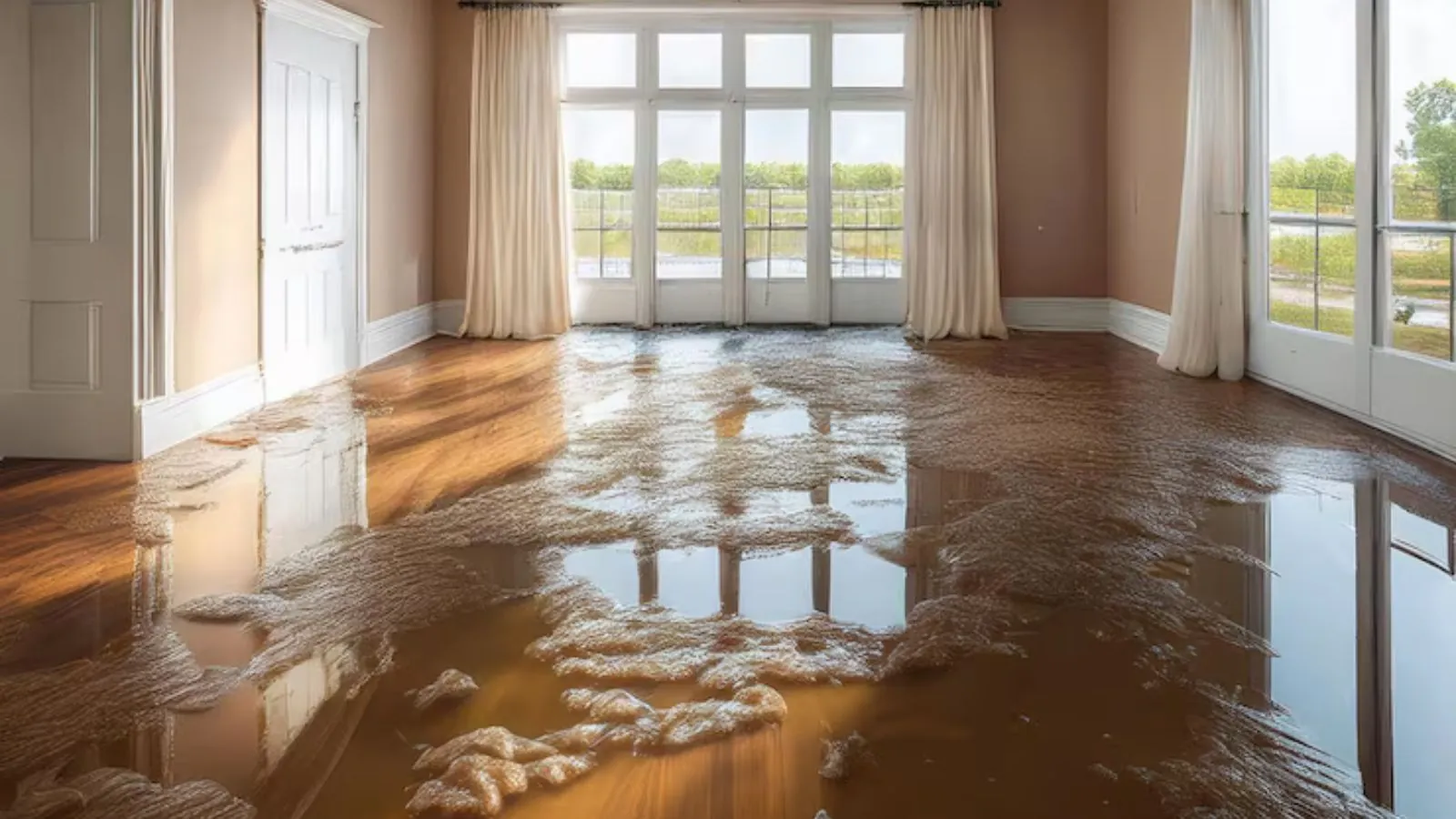
Churchill Club is a single-family subdivision in Oswego, described in local listings as east of Douglas Road and north of Wolfs Crossing Road. A 2014 Patch roundup says it was built from 2004 to 2012 by K. Hovnanian Homes. The Village lists it in the same brush collection zone as Gates Creek, Hunt Club and Ogden Falls. This page speaks to homeowners whose house has water where it should not be.
What we can and cannot say about the area
Homes of this age are not old, and age alone does not tell us what failed. Water damage here usually starts inside the house, from a supply line, a fitting, an appliance or a water heater. We do not claim that Churchill Club floods or that any type of damage is common here. We do not have evidence for that.
On flood maps, the Village keeps a public list of map changes. It includes two Churchill Club lots, 35 and 44, from 2006, which means individual lots were reviewed against the mapped floodplain. That is a lot-level record. Neighborhood-specific FEMA flood-zone status not verified for the rest of the subdivision, and your own lender or the Village can check your address.
Where water in a newer house usually comes from
Supply line and fittings
A hose or fitting lets go behind a wall or under a sink and runs unseen.
See this serviceWater heater
A tank leak or a failed valve can spread water across a finished basement or utility room.
See this serviceAppliances
A washing machine hose, dishwasher line or refrigerator line fails and soaks the floor.
See this serviceA closer look at drying a larger single-family house
Water in a larger house tends to reach more rooms than it first appears. We start by finding where the water traveled, including under flooring and inside the lower wall, with a moisture meter. Then we choose equipment for the rooms, not for the house as a whole.
- Extract standing water with pumps or an extractor.
- Remove materials that cannot be dried, such as saturated pad.
- Place air movers along walls and dehumidifiers to pull moisture from the air.
- Take readings each visit and adjust the equipment.
- Confirm dry readings against an unaffected reference before pulling equipment.
Safety in a finished lower level
If a smell of gas is present, leave and call Nicor at 888-642-6748, then 911.
- Stay out of any room where water meets outlets, power strips or plugged-in appliances.
- Do not turn on breakers while standing in water.
- Do not use a household vacuum on standing water.
- Photograph the damage before moving contents.
Insurance documentation that helps
Coverage depends on the cause of the damage and your policy, and we do not decide coverage. What helps any claim is a clear record. Photographs, dated moisture readings, a written scope of work and receipts show what happened and what was done. Ask your insurer which documents it wants before you start repairs.
The IICRC S500 standard is the reference we use to decide what is dried in place and what is removed. Water category and the time materials stayed wet drive that decision, and moisture readings back it up.
Local help when it is not a plumbing problem
If water comes from the street or a main, call Village of Oswego Public Works at (630) 554-3242.
For building permits on repairs, call Village of Oswego Building and Permits at (630) 554-2310.
The Illinois Department of Insurance answers consumer coverage questions at no charge.
Nearby subdivisions have their own pages, including Farmington Lakes and Heritage of Oswego. See the service area for the rest, and our appliance leak page for hose and line failures.
Questions from Churchill Club homeowners
We cover Oswego and answer calls from across the village. Call with your street address and we will confirm.
We have not verified that for the subdivision. The Village list includes two lots from 2006, and a property-level check is the only reliable answer.
Call anyway. Hidden leaks keep wetting framing and drywall, and readings show how far the moisture has spread.
It depends on the cause and your policy. Sudden plumbing failures are treated differently from flood or gradual seepage, so ask your insurer.
Yes. A moisture meter can find damp material behind a surface without opening it, and we explain what the readings mean.