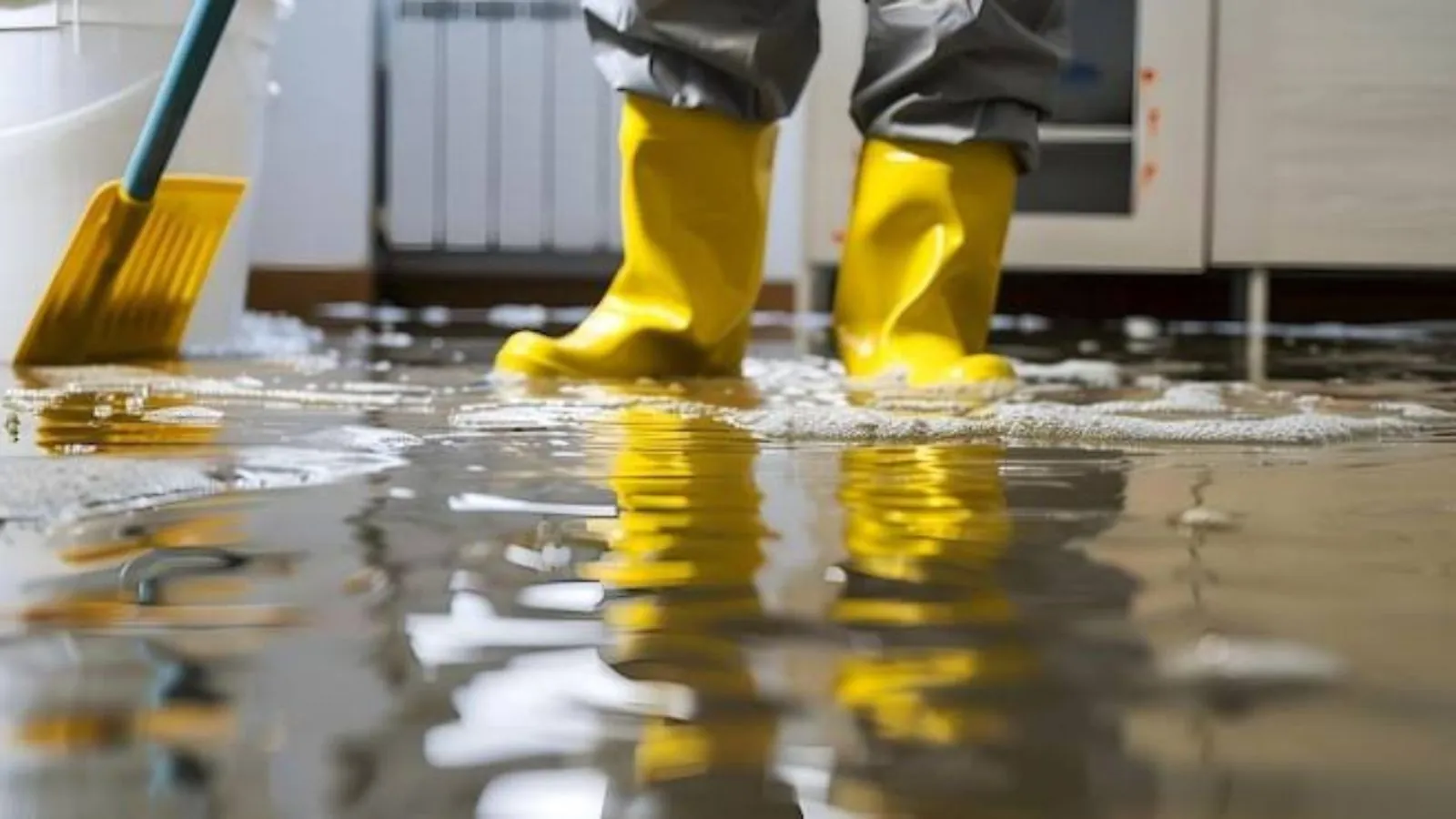
A water damage insurance claim in Oswego moves through a predictable set of stages, and most problems come from skipping the early ones. This guide lays out the steps in order, from the first hour to the final payment, so you know what to expect. It is general information. Your policy and your insurer set the actual rules.
Step 1: make the house safe and stop the water
Close the main water valve if a supply line is the source, avoid standing water near electricity and move to a dry part of the house if the loss is large. Protecting life comes first, and protecting the property from further damage comes second. Most policies expect you to take reasonable steps to prevent more loss, so emergency water removal is generally part of that duty.
Step 2: document before you clean
- Take wide photographs of each room, then close-ups of the source and damaged items.
- Take a short video walking through the affected area.
- Write down the time you found the water and what you did.
- Keep damaged items until the adjuster has seen them, or take photographs and ask what to keep.
- Save receipts for emergency services, hotel stays and supplies.
Step 3: report the loss
Call your insurer or agent and report the loss. Ask for a claim number, the adjuster's contact information and what the insurer needs from you. Insurers set time requirements for reporting, and a delay can complicate the claim. You do not need to know the final cost to report.
Step 4: start mitigation
Water removal and drying should not wait for the adjuster. Restoration crews extract water, set drying equipment and record moisture readings, and those records document what the loss looked like on day one. Ask for the drying log and a list of removed materials. This is also when you ask the contractor for a written scope and price before work begins. See water extraction for what happens during the first visit.
Need mitigation started?
Call the 24/7 line and we will explain the steps and the paperwork before work begins.
Step 5: the adjuster visit and the estimate
The adjuster inspects the damage and writes an estimate, usually using standard pricing software. Their estimate and your contractor's may not match. That does not mean one is wrong. Differences often come from scope: how much drywall is removed, whether pad is replaced, how many days of equipment run. Ask for line-by-line detail and compare. A contractor can submit a supplement if hidden damage is found later.
| Document | Who creates it | What it is for |
|---|---|---|
| Photos and video | You | Proof of condition on day one. |
| Drying log and moisture readings | Restoration contractor | Proof of what was wet and when it was dried. |
| Adjuster estimate | Insurer | The amount the insurer will pay for covered items. |
| Contractor scope and invoice | Contractor | What work was done and its cost. |
| Receipts | You | Emergency costs and temporary housing. |
Step 6: repairs and payment
Payments may arrive in stages, and the check may include your mortgage company if there is a lien on the home. Keep the repair scope tied to the estimate and ask the insurer before changing it. If you disagree with the amount, ask for the reasoning in writing and consider asking your agent or the Illinois Department of Insurance for guidance.
How long a claim can take
Simple claims can close within weeks, while claims with hidden damage, disputes over scope or contractor supplements take longer. Ask the adjuster what the next step is and when you will hear back. Write down the dates of every call, because a claim is easier to move along when you can say exactly when you last heard from someone.
Common mistakes that shrink a claim
- Throwing away damaged items before they were photographed or inspected.
- Waiting days to report while the water kept spreading.
- Signing a work authorization or a payment assignment without reading it.
- Letting the repair scope grow beyond the estimate without telling the insurer.
- Skipping receipts for emergency services and temporary housing.
If you cannot live in the house while it dries, many homeowners policies include additional living expense coverage. Ask your agent what it pays for, what it caps and what receipts it requires. Keep food and lodging receipts in the same folder as your photographs.
Illinois help for claim questions
The Illinois Department of Insurance says it answers consumer questions free of charge, and it notes that insurers have time requirements for filing claims. That makes the state a neutral place to ask what a deadline means, if the insurer's answer is unclear.
Oswego homeowners often carry separate flood policies with a waiting period, so check which policy applies to your loss before you call. The wrong claim path can delay mitigation.
We serve Oswego and nearby towns such as Sugar Grove, and the full service area is on our service area page. After the water is out, structural drying is the step that documents the dry condition your adjuster needs.
Questions readers ask
Stop the water and make the house safe, then call both. Restoration should not wait for the adjuster.
Wide and close photographs of each affected room, the source and damaged contents, plus a short video.
Scope often differs, such as how much drywall is removed. Compare line items and ask for a supplement if hidden damage appears.
Generally you can choose your own contractor. Ask your insurer about its rules.
The Illinois Department of Insurance answers consumer questions free of charge.