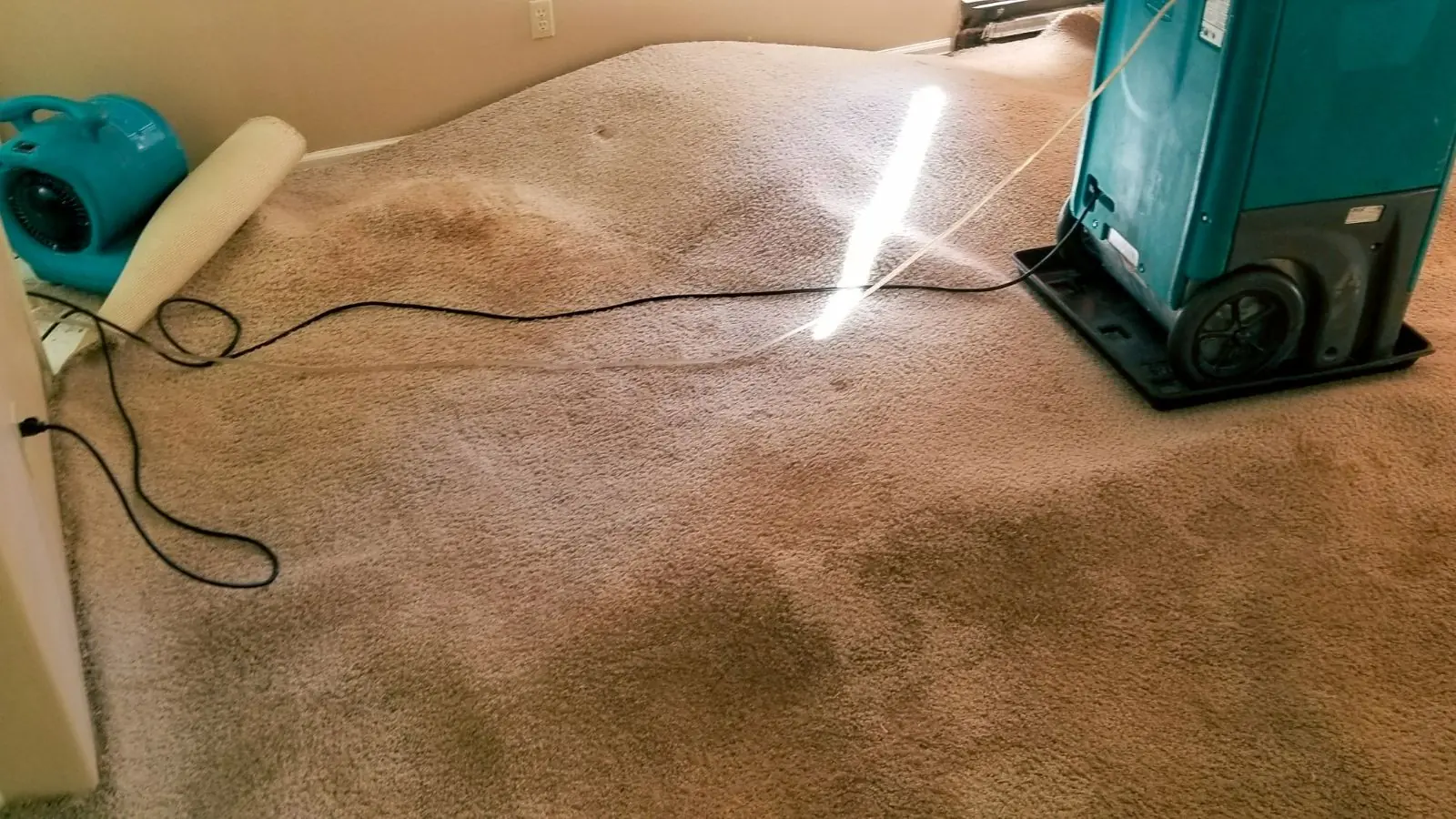
Water damage in a rental in Oswego raises questions that a homeowner never asks. Who calls whom, who pays, who is allowed to hire a contractor and what happens to the tenant's belongings. This guide gives tenants and landlords a practical order of steps. It is general information, not legal advice, and the lease and Illinois law set the real rules.
What a tenant should do first
- Stop the water if it is safe, usually at the shutoff valve for the fixture or the main.
- Photograph the source and the damage, including your belongings.
- Tell the landlord or property manager in writing, such as an email or a text, and keep a copy.
- Move valuables out of the wet area.
- Call your renters insurance company about belongings and temporary housing.
Safety in a rental
Safety comes before the paperwork.
- Do not stand in water near outlets or appliances.
- If a ceiling is bulging, stay out from under it.
- If the water might be sewage, keep everyone out and report it immediately.
What a landlord should do
Respond quickly, stop the source, document the unit and arrange water removal and drying. Notify the building insurer, and keep tenants informed about access and timing. Drying delays can create a second claim for mold and for damage to the tenant's belongings, so speed helps both sides. A restoration company can document the condition for the insurer and the tenant.
| Item | Usually the landlord | Usually the tenant |
|---|---|---|
| Building structure, plumbing, drywall | Yes | No. |
| Tenant belongings | No | Through renters insurance. |
| Temporary housing | Depends on the lease | Renters insurance may help. |
| Cause is tenant negligence | Dispute possible | May be responsible. |
| Notice | Respond promptly | Notify in writing. |
Illinois repair notice rules in general terms
Illinois has a Residential Tenants' Right to Repair Act (765 ILCS 742). In general terms, a tenant can give written notice of a needed repair. The landlord then has about 14 days to fix it. If the landlord does not, the tenant may arrange a limited repair and deduct a capped amount from rent. The cap is small, reported as the lesser of $500 or half a month's rent.
Illinois also has protections against retaliation. Rules have conditions, so read the statute or ask a tenant legal aid group before relying on it. Water damage that makes the unit unsafe may raise other issues, so consider legal advice.
Water in your rental unit?
Call the 24/7 line for emergency removal. We document the unit for the landlord, the tenant and the insurers.
Dry quickly and keep the record
Both sides benefit from a drying log with daily moisture readings and a list of removed materials. It shows when the structure was dry. See water extraction for the first visit and ceiling water damage repair if the leak came from above.
Cooperating on the repair
Tenants should allow reasonable access for repair and drying, and landlords should give notice before entering. Agree on times, on who removes belongings and on who is present. A short email confirming each plan keeps both sides on the same page and creates a record if there is later disagreement.
Shared walls and multi-unit buildings
In an apartment or a duplex, water can cross units through walls and ceilings. If your neighbor's leak is wetting your unit, tell the landlord at once and do not enter the other unit. Drying may need to include both sides. Tell your landlord about any odors or stains that appear after the repair, because they may mean something stayed wet.
Documentation tips for tenants
Send the first message the same day, with photographs attached, and keep sending dated updates until the repair is done. Photograph belongings before they are moved and make a list with approximate values. Keep your renters policy number handy, and keep receipts for any hotel or food costs. If you moved out for the drying, note the dates.
Landlord communication and timelines
Landlords should tell tenants when work will start, how long equipment will run and when the unit will be usable. Tenants should know that drying machines run all day and may be loud. A short written schedule prevents arguments. If a tenant is displaced, check the lease and ask the insurer about rent abatement or temporary housing.
Whichever side is paying, ask for drying records that follow the IICRC S500 standard. Daily readings against a dry reference show when the unit was actually dry, and they settle disputes about whether a lingering smell is an old problem or a new one.
Rentals in a mostly owner-occupied town
The Chicago Metropolitan Agency for Planning data puts Oswego at about 87.9 percent owner-occupied housing, so renters are a minority here. That means many rentals are single-family homes or townhomes leased by owners, and the landlord may be an individual who needs help understanding the claim process.
If a rental has an HOA, the village says it cannot enforce HOA covenants, so the association may have its own repair rules for common elements.
We serve Oswego and nearby towns including Sugar Grove, and the full service area is listed on its own page. Keep all notices, photographs and invoices in one folder.
Questions readers ask
The landlord generally pays for building repairs, while the tenant's belongings are covered by renters insurance. The lease and the cause matter.
Many leases require it, and it covers belongings and temporary housing. Check your lease and ask an agent.
Yes. Written notice with the date and photographs creates a record.
Illinois has a limited statute with notice and cap rules. Read it or ask legal aid before acting.
Census survey data compiled by the Chicago Metropolitan Agency for Planning shows about 87.9 percent owner-occupied homes.