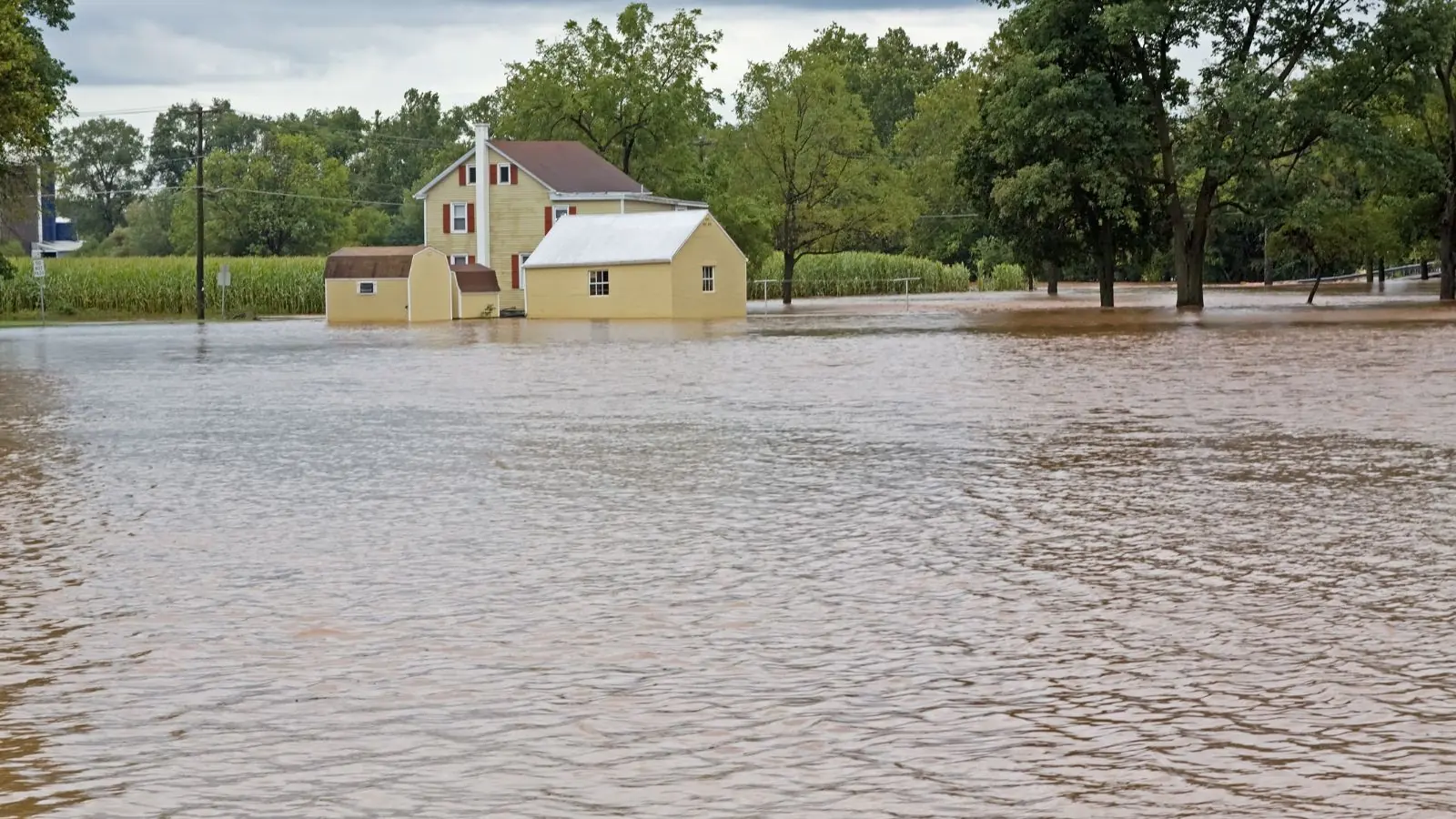
Storm season in Oswego brings heavy rain, wind and the occasional flood. Most storm water damage comes from a few predictable failures: a sump pump that stops, gutters that spill at the foundation, a roof that lets water in and a drain that backs up. This checklist covers the fixes that cost the least and matter the most. Do it before the first big storm, not during.
Outside the house
- Clear gutters and downspouts, and extend downspouts several feet from the foundation.
- Check grading so the ground slopes away from the house.
- Look at the roof for loose shingles and failed flashing.
- Check window wells for debris and make sure covers are intact.
- Trim branches that hang over the roof.
In the basement
| Item | What to do | Why it matters |
|---|---|---|
| Sump pump | Pour water into the pit and watch it start and discharge | Confirms the pump and float work. |
| Battery backup | Test it and replace an old battery | Power often fails during storms. |
| Discharge line | Check it runs clear and away from the house | A frozen or kinked line fails quietly. |
| Floor drain | Clear debris and check the trap | Drain backups start here. |
| Stored items | Raise boxes off the floor | Cardboard wicks water. |
Sump systems are the main defense for many Oswego basements. If yours runs often, ask a plumber about a backup. Know where your main water shutoff is and mark it so anyone can find it in a hurry.
Storm already hit?
Call the 24/7 line for water removal and drying.
Insurance checks before the storm
The Illinois Department of Insurance notes that standard homeowners policies typically exclude flood, and flood coverage is separate, with a waiting period that is usually 30 days. That means buying flood insurance after a storm warning is too late. Ask your agent about flood and water backup coverage, and take dated photographs of your basement and belongings. A simple home inventory with photographs helps any claim.
When the storm hits
- Stay out of flooded basements while power is on.
- Keep a flashlight and phone charger near the stairs.
- Know the number for Nicor, 888-642-6748, and call 911 for downed lines.
- After the storm, photograph first and then call for help.
For the damage itself, see storm water damage cleanup and basement water damage cleanup.
What to do the night before a forecast storm
Move boxes and valuables off the basement floor, charge your phone and your sump battery, clear storm drains near the house and check the forecast for rainfall totals. If you are away, ask a neighbor to check the basement. Know who to call if water starts coming in, and keep our number where everyone in the house can see it.
Grading and gutter fixes that help
Soil should slope away from the foundation, and downspouts should discharge several feet from the house. Splash blocks that point at the wall do little. Window well covers keep rain out of wells, and a well that drains into gravel is better than one that fills like a bucket. These are small jobs, and a landscaper or handyman can do them in an afternoon.
A small water emergency kit
Keep a flashlight, a phone charger, work gloves, rubber boots, a bucket, a few towels and contractor trash bags near the basement stairs. Tape the water shutoff location and the phone numbers for your insurer, your plumber and our 24/7 line on the inside of a cabinet. It takes ten minutes and saves time in the dark.
A photo inventory
Walk through the house once a year with your phone and record each room, the basement, the garage and big-ticket items. Open drawers and closets. Store the video in a cloud folder so it survives a loss. When a claim comes, a dated record of what you owned is worth hours of memory work.
What Oswego storms have done before
In July 1996, more than 16 inches of rain fell in 24 hours across northern Kendall and southern Kane counties, a state record, and Oswego and Little Rock townships were among the hardest hit. In April 2013, the Illinois State Climatologist reported 6.90 inches of rain, 3.13 inches above the April average, and Kendall County was declared a disaster area.
The Village of Oswego publishes FEMA flood maps and a Waubonsee Creek gauge. The Fox River gauge is at Montgomery, and the village says Oswego levels differ slightly. Look at both before a forecast of heavy rain.
We serve Oswego and nearby towns including Sugar Grove, where village code limits sump discharge onto rights of way from November 1 to May 1, so check your code. The service area page lists the rest of our coverage.
Questions readers ask
Test the sump pump, clear gutters, check grading and know your shutoff valves.
Ask your agent. Standard policies typically exclude flood, and flood coverage usually has a waiting period of about 30 days.
Before storm season and after any long dry spell. A quick test with a bucket of water confirms it works.
A battery backup helps. Without one, keep valuables off the floor and call for water removal if water rises.
Yes. Records include heavy rain in July 1996 and April 2013, when Kendall County was declared a disaster area.