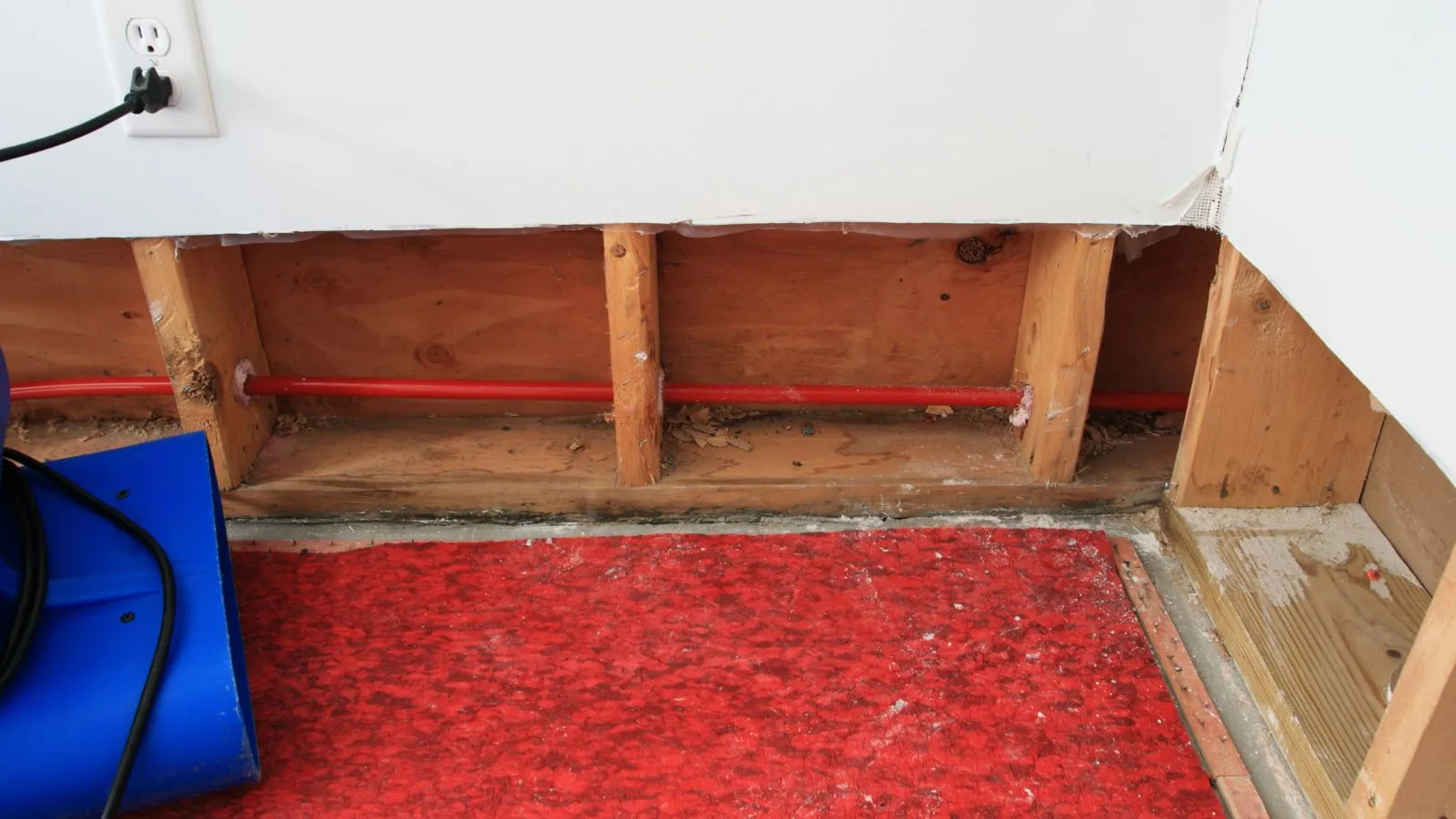
Whether you need a permit to repair water damage in Oswego depends on what is being repaired. Extracting water and drying a structure generally does not involve a permit, while replacing a water heater, moving plumbing or rewiring an outlet usually does. This guide shows how to figure out what applies, and who to call, so repairs do not stall at inspection. It is general information. The village makes the final call.
Work that usually does not need a permit
- Water extraction and drying.
- Removing wet drywall, insulation or carpet.
- Cleaning and disinfecting surfaces.
- Painting and minor cosmetic repair.
These steps are part of mitigation. They do not change the structure or the systems, so they are not typically permitted. Still, if you are unsure, ask the village.
Work that often does
| Repair | Permit category to ask about | Notes |
|---|---|---|
| Replacing a water heater | Water Heater | Ask about venting and expansion tank rules. |
| Repiping or moving plumbing | Plumbing Work | A plumber normally handles it. |
| Rewiring or replacing circuits | Electrical Work | A licensed electrician normally handles it. |
| Finishing or remodeling a basement | Basement/Remodel | Rebuilds can fall into this. |
| Replacing a roof after storm damage | Re-roof | Includes flashing and decking work. |
The Village of Oswego Building and Permits office lists permit categories that include water heater, plumbing work, electrical work, basement and remodel, re-roof and siding. Rules change, so call before work begins. The office is at 100 Parkers Mill and its phone number is (630) 554-2310.
How to check in five minutes
- Write down exactly what will be repaired or replaced.
- Call the Building and Permits office with the address and the scope.
- Ask whether a permit is needed and what inspections apply.
- Ask your contractor who will pull the permit and who schedules inspections.
- Keep the permit and inspection records with your insurance file.
Water damage that needs repairs?
Call the 24/7 line and we will coordinate drying so repairs can start on dry framing.
Homeowner associations are separate
The village states that it cannot enforce homeowner association covenants. If you live in an HOA, you may need approval from the association for exterior changes, even if the village does not require a permit. Check your covenants before ordering materials.
Keep a paper trail
Save your permit numbers, inspection results and the names of the people at the village you spoke with. If you sell the house or file an insurance claim, a record that work was permitted and inspected is worth having. Photograph the work before drywall closes it in, because inspectors and buyers both ask what is behind the wall.
Condos, townhomes and rentals: who pulls the permit
If you own a condo or townhome, the association may control which contractors can work and when. In a rental, the landlord arranges the repair, and the tenant should not hire trades or pull permits. In either case, ask who is responsible before work begins, and keep a copy of any approval. Missing paperwork is a common reason repairs stop at inspection.
Permits, inspections and your drying schedule
Drying comes first, and permits slow nothing down at that stage. Rebuilding is where the schedule matters. If a permit and an inspection are needed, they add days between the dried framing and the closed wall. Ask the village what inspections apply, and ask your contractor to book them so the wall is not closed before it is checked. A dry wall that gets closed before inspection may have to be opened again.
Wet electrical before power comes back
Outlets, switches and panels that were wet should be checked by a licensed electrician before power is restored to the area. This is a safety point more than a permit point, but electrical work often triggers one. Ask your electrician whether the repair needs a permit and whether the village inspects it.
The drying side of a loss follows the IICRC S500 standard, which is why it is treated as mitigation and not as a permitted rebuild. Ask your contractor for the drying log when you apply for any permit for the repair, since inspectors like to see that the framing was dry.
Oswego offices and utilities
Building and Permits is at 100 Parkers Mill and Public Works can be reached at (630) 554-3242 for problems on the village side of the water system. Natural gas is Nicor, with an emergency line at 888-642-6748 that is open 24 hours. Call JULIE at 811 before any digging.
The Oswego Fire Protection District at 3511 Woolley Road covers fire protection, and smoke alarms and similar life-safety items may come up in remodel inspections. Ask the village what applies.
For a water heater failure see water heater leak cleanup, and for finished lower levels see basement water damage. We serve Oswego and nearby towns including Sugar Grove, where village rules differ, so check the service area page and call the right municipality.
Questions readers ask
Typically not for drying and cleanup, but call the village if you are unsure.
The village lists a water heater permit category. Call (630) 554-2310 to confirm.
It depends on the contract. Ask in writing.
It may. The village says it cannot enforce HOA covenants, so check yours separately.
Leave the house and call Nicor at 888-642-6748, then 911 if needed.