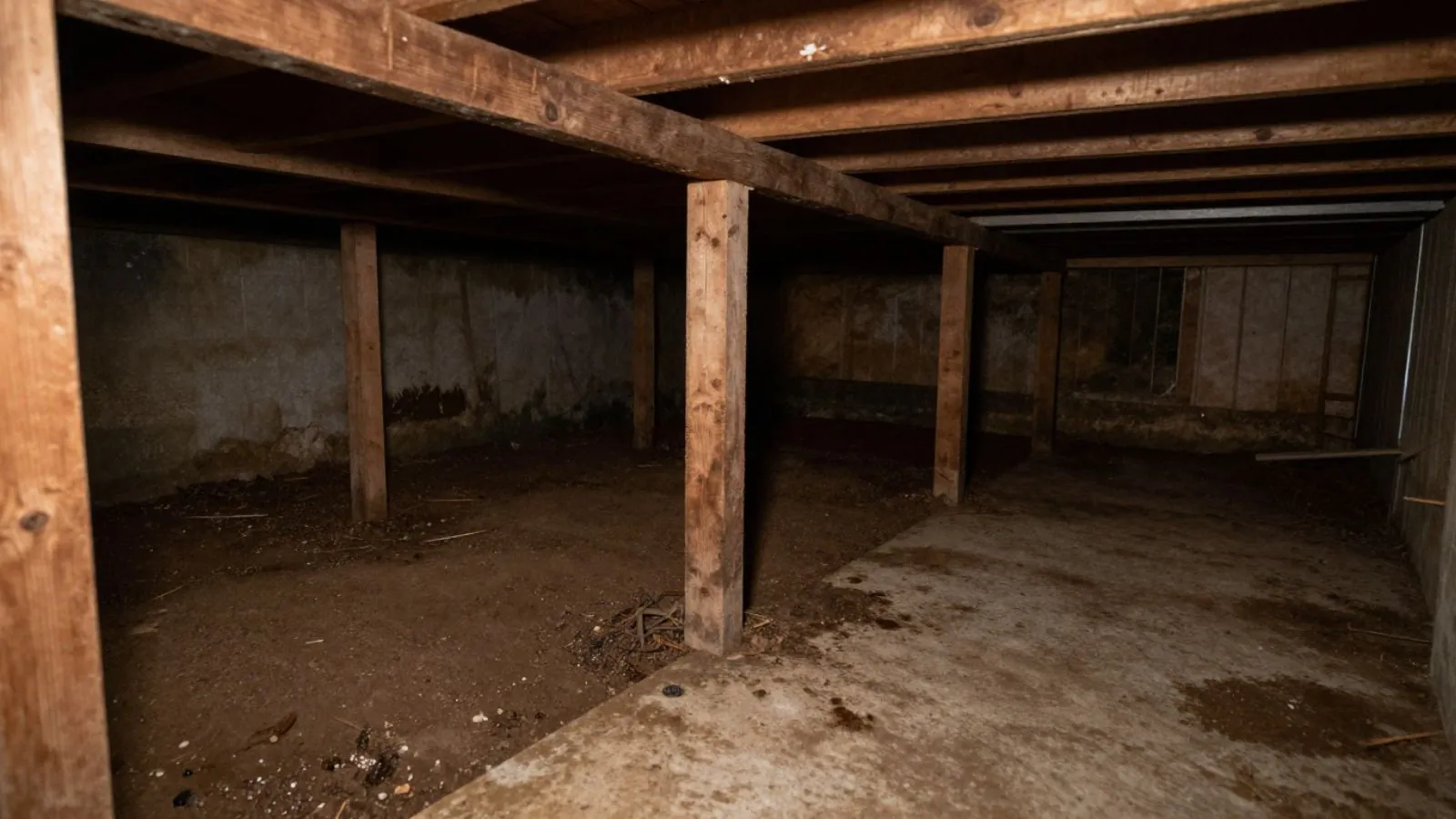
A musty smell after water damage in Oswego means something in the house is still damp. Odor is a clue, not a diagnosis, and it usually points to moisture that is hidden in a wall, under a floor or in the slab. This guide covers where moisture hides, how smells return on humid days and when you should call for drying or for mold remediation.
Where moisture hides
Inside walls
Insulation and drywall hold water and release odor into the room.
Under flooring
Pad, underlayment and subfloor stay damp after the top looks dry.
Behind cabinets and baseboards
Closed cavities do not get air.
In the slab
Concrete holds moisture for a long time in basements.
In ceilings and attics
Insulation sags and holds water above the room.
In HVAC
Condensate pans and ducts collect damp air.
Odor often gets stronger on humid days or when the HVAC runs, because moist air pulls smell out of damp materials. A room that smells fine in January and musty in July is telling you something. A dehumidifier in the room may reduce humidity but does not dry the materials behind the surface.
What to check yourself
- Look for stains, bubbling paint, warped trim or soft spots.
- Check closets and corners on outside walls.
- Smell near baseboards and under sinks.
- Look at the area under the carpet at an edge, if it lifts easily.
- Check the basement for damp patches on the slab.
If you find damp materials, stop using fans across them and call. A moisture meter and thermal camera can map the wet area without tearing into walls. Our structural drying page explains how the drying works and how readings are tracked.
Smell that will not go away?
Call us to take readings and find the source.
When it is mold
A musty smell can come from mold growth, but smell alone cannot tell you. If you see dark or fuzzy growth, or the area has been wet more than a couple of days, mold remediation may be needed. The process is containment, removal of porous materials, HEPA cleaning and verification. See mold remediation for how it works. Do not sand or bleach large areas. If anyone in the home has health concerns, ask a doctor.
Deodorizing without drying does not work
Air fresheners, ozone machines and sprays can hide odors for a short time. If the materials are still wet, the smell returns. The fix is to remove or dry the wet material. Only after the structure reads dry does cleaning or deodorizing make sense.
How long should a smell last after drying?
Once the structure is dry and any removed materials are out of the house, odors usually fade over days. If a smell remains weeks later, something is probably still damp or something porous was left behind. Ask for new readings before buying air purifiers or sprays.
When to stop doing it yourself
Opening windows, running a dehumidifier and wiping surfaces are fine for a small damp spot. If the smell is strong, the area is large, a ceiling or wall is soft, or the water came from a drain, stop and call. Cutting into a wall without a meter often misses the wet area, and disturbing mold spreads spores. A visit with readings is cheaper than guessing.
A room-by-room smell hunt
Close the house for an hour, then walk in and go room by room, putting your nose near baseboards, closets, vents and under sinks. Check the laundry area, the water heater closet and the basement corners. A smell that is strongest at one wall or one corner points toward moisture inside that wall. Note where it is strongest, because it helps us start the readings in the right place.
Humidity as a clue
Commonly cited guidance suggests keeping indoor relative humidity roughly between 30 and 50 percent. A cheap hygrometer in the basement tells you whether the air is part of the problem. Readings that stay high after a dehumidifier runs suggest a moisture source, such as seepage or a damp slab, that the machine cannot keep ahead of.
Why smells show up in finished Oswego basements
Most Oswego homes were built between 1990 and 2009, according to the Chicago Metropolitan Agency for Planning, and many have finished lower levels with carpet, drywall and insulation sitting against concrete. Concrete holds moisture, so a past seepage or sump event can keep a basement smelling damp long after the surface looks dry.
Summer humidity in northern Illinois pushes more moisture into basements through the air. If the smell appears when the weather turns humid, ask for a moisture reading of the slab and the lower wall, not just a smell test.
We serve Oswego and nearby towns including Sugar Grove, and the full service area is on its own page. For basement cases, see also basement water damage.
Questions readers ask
Moisture trapped in walls, floors or the slab produces odor. The smell returns when humidity rises.
No, but it means moisture. A meter and visual check help sort it out.
It reduces humidity but may not dry materials behind surfaces.
They mask odor. The source must be dried or removed.
Humid air adds moisture to cool concrete and finishes. Check readings of the slab and lower walls.